
Estoi Palace and the Milreu Roman Ruins
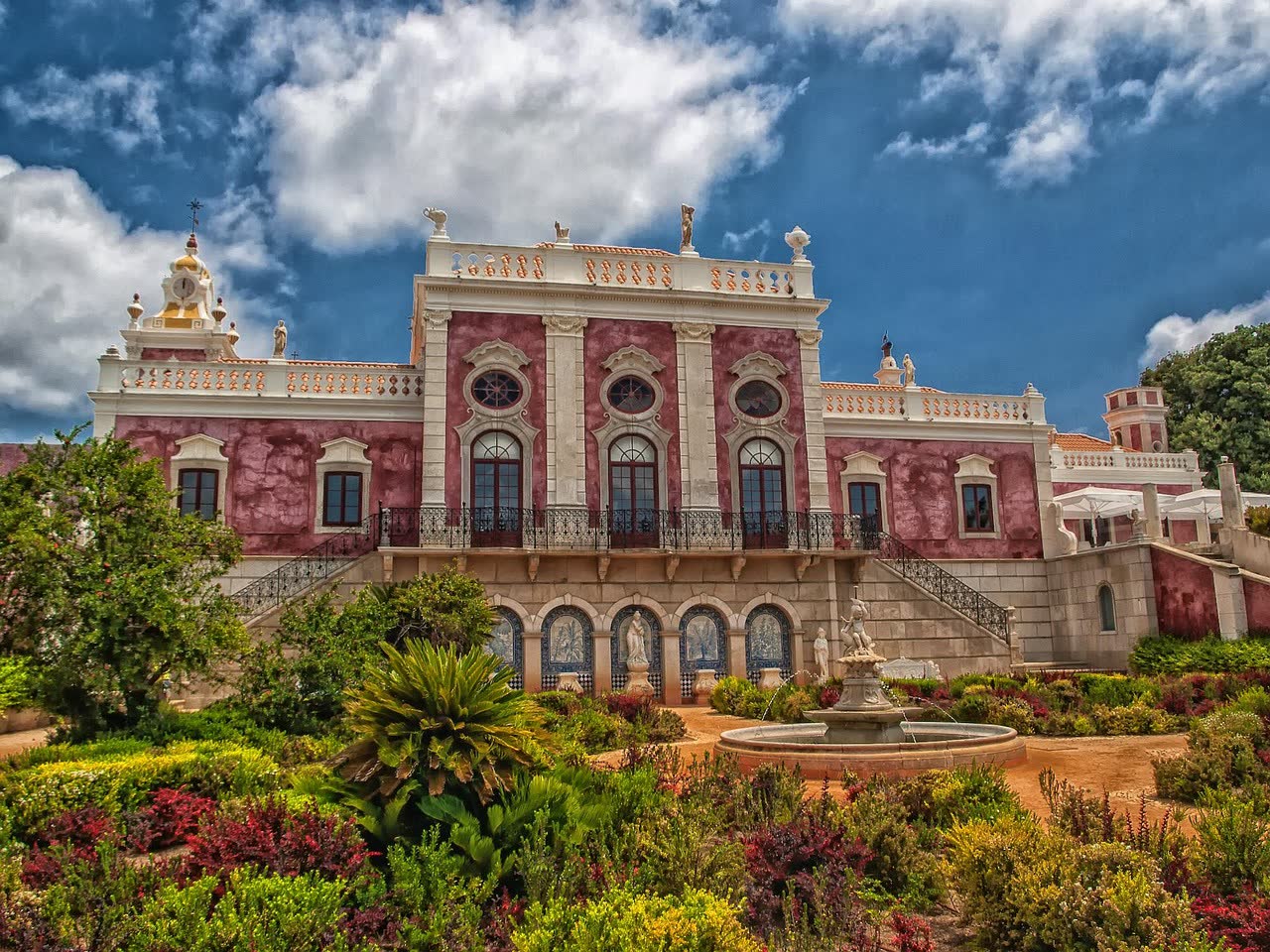
Just inland from Faro, the village of Estoi has two surprising sights: a pink rococo palace with ornate gardens, now a pousada, and the Roman ruins of Milreu, with mosaics of fish and sea creatures. Together they make a rewarding half-day away from the beaches.
Quick answer: Estoi is about 15 minutes north of Faro. Visit the Milreu Roman villa on the edge of the village for its mosaics and temple ruins, then walk to the Estoi Palace gardens with their tiles, statues and terraces. Allow 2 to 3 hours. Combine with Faro or Loulé.
Why go
Most visitors to the Algarve never leave the coast, so Estoi stays quiet even in summer. In one small village you get a Roman country estate with real mosaics and a palace that looks as if it belongs near Lisbon. It is a good choice for a cloudy day, a break from the sand, or a short stop on the way to the hills.
What to see
Milreu Roman ruins
- What it was: a farm villa first lived in during the 1st century AD, rebuilt in the 2nd and 3rd centuries as a wealthy country house. People went on living here until about the 10th century. It has been a National Monument since 1910.
- What you see: the remains of a large Roman villa, with rooms set round a columned courtyard, baths, mosaics showing fish and dolphins, and a temple to a water god that was later used as a church. The tall walls of the temple are the most striking part. You will also see a much later farmhouse, from the 16th century, built over part of the site, which houses the visitor centre.
- Time needed: about an hour.
- 2026 works: Milreu closed on 27 April 2026 for about four months of works to upgrade the visitor centre and improve access, with reopening planned for around September 2026, so check it has reopened before you go. Check the official cultural heritage ticket site that it has reopened before you go.
- Hours: when open, usually Tuesday to Sunday from 10am to 6pm between May and September, and 9am to 5pm between October and April, with a break from 1pm to 2pm. Last entry is 30 minutes before closing. It is closed on Mondays and on 1 January, Easter Sunday, 1 May, 7 September (Faro’s town holiday) and 25 December. Entry is about €2, and children aged 12 and under go free.
Estoi Palace
- What it is: a pink palace with rococo decoration and formal terraced gardens full of azulejos and statues. Work began in the 1840s on an 18th-century country estate, then stalled. José Francisco da Silva bought the unfinished building in 1893, completed it in 1909, and was made Viscount of Estoi in 1906.
- Look for: the blue and white and the coloured tile panels on the garden terraces, the small chapel, and the Casa da Cascata, a garden pavilion with a copy of Canova’s Three Graces.
- Today: it’s now a pousada, opened in 2009 after Faro council bought the run-down building in the late 1980s. Part of the gardens is open from the village, and the grand rooms and a small museum of local archaeological finds can usually be visited for a small fee. Access can change, so ask at reception politely.
- Time needed: 45 minutes to an hour, longer if you stop for a drink on the terrace.
The village
- The village: a quiet square, church and cafés. It takes 20 minutes to wander round.
Getting there
- By car: Estoi is about 10 km north of Faro, roughly 15 minutes’ drive. You can usually find street parking in the village.
- By bus: Vamus Algarve buses run from Faro bus station in about 25 minutes, but they are not frequent, especially at weekends. Check the return time before you go.
- On foot between the sights: Milreu is on the edge of the village, an easy walk from the palace.
How long to spend
Allow two to three hours for both sights. A good half-day: arrive at Milreu when it opens, walk into the village for coffee on the square, then visit the palace gardens. Have lunch in Faro, or drive on to Loulé or São Brás de Alportel for the afternoon.
If Milreu is still closed, you can see the palace and village in an hour, then spend the rest of the day in Faro’s old town.
Food
- Inland Algarve flavours: almonds, figs and carob go into many local cakes and sweets.
- Medronho: a strong spirit made from the fruit of the strawberry tree, found in the hills north of here.
- Country cooking: stews, grilled meats and soups are more common here than on the coast. See what to eat in Portugal.
Nearby
- Faro: see things to do in Faro.
- Loulé: see Loulé.
- São Brás de Alportel: a hill town with a costume museum.
When to go
Spring and autumn are the most comfortable, when the gardens are green and the ruins are not too hot. Winter is fine too, as Milreu is normally open most of the year. In summer, go first thing.
In early May, usually on 2 May, Estoi holds the Festa da Pinha, a pilgrimage to Our Lady of Pé da Cruz with decorated carts, horses and riders in traditional dress. It is the busiest day of the year in the village.
Tips
- Opening days: check before you go, as hours vary. Avoid Mondays.
- Lunch break: Milreu closes from 1pm to 2pm, so arrive by mid-morning.
- Heat: the ruins have little shade, so visit in the morning.
- Mosaics: stay on the paths and don’t step on the floors.
FAQ
Is Milreu open on Mondays?
No. Milreu is closed every Monday, and on a few public holidays. It also closed for works from late April 2026, with reopening planned for around September 2026, so check it has reopened before you go.
Can you visit Estoi Palace if you are not staying there?
Usually, yes. Part of the gardens is open from the village, and the grand rooms can normally be seen for a small fee, but ask at reception first.
How do you get to Estoi from Faro without a car?
Take a Vamus Algarve bus from Faro bus station, about 25 minutes. Services are infrequent, so plan your return, or take a taxi.
Are there other Roman ruins worth seeing in Portugal?
Yes. One of the best-preserved Roman towns in Portugal is Conimbriga, near Coimbra. See Conímbriga.
More: the best Algarve villages, the Algarve on a rainy day and the best pousadas.
Prices and details change, so please double-check before you travel. Spotted something out of date? Tell us in the groups.
Still got questions?
Ask 305,000+ travellers and locals in our free Facebook groups.