
The Best Time to Visit the Douro Valley
The Douro Valley changes dramatically through the year, from green spring vines and scorching summers to the September harvest, red and gold autumn leaves, and quiet, misty winters. Here’s the best time to visit the Douro, and what each season offers.
Quick answer: September is the classic time, with the grape harvest and warm weather. October brings the most beautiful autumn colours. May and June are green and pleasant. July and August are very hot (often well above 30°C). Winter is quiet, cool and misty, with some quintas on reduced hours.
Why timing matters here
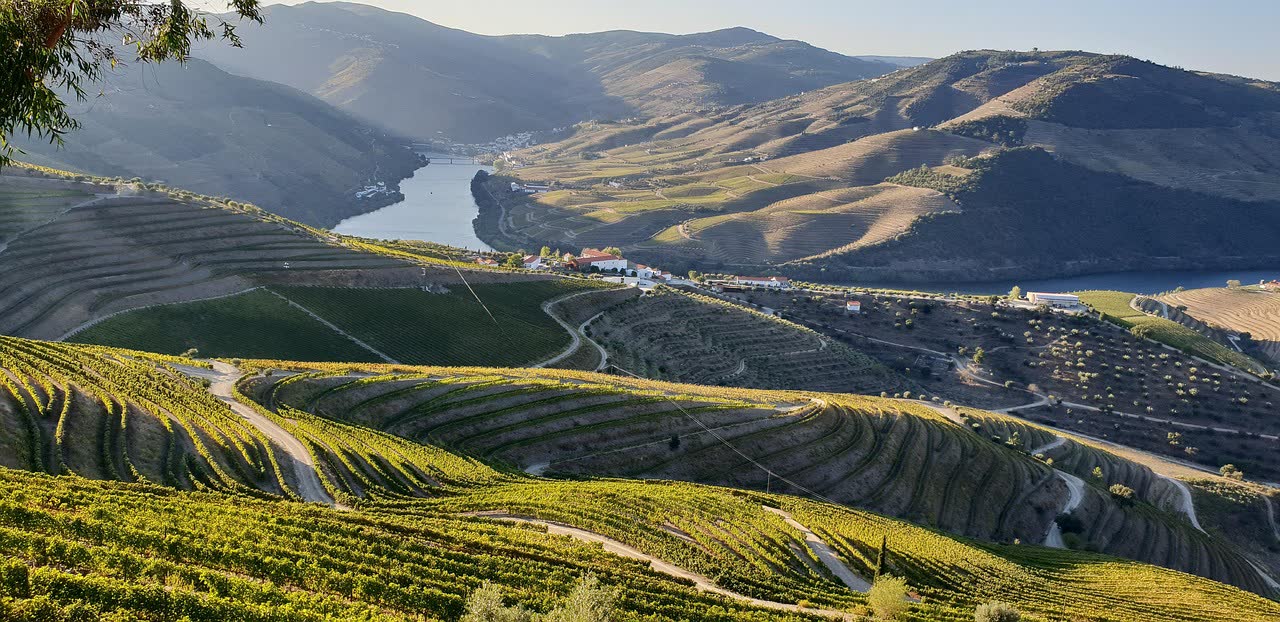
The Douro is a deep river valley lined with steep terraced vineyards, about two hours east of Porto. Because it’s sheltered from the Atlantic, it gets much hotter in summer and colder in winter than the coast. The vines also set the rhythm of the year. What you see, and what the wine estates (quintas) offer, depends a lot on the month.
The Douro was marked out as a wine region in 1756, one of the first in the world, and the Alto Douro Wine Region has been a UNESCO World Heritage site since 2001.
Season by season
Spring (March to May)
Fresh green vines, wildflowers and pleasant temperatures. Almond blossom appears in the upper Douro in late February and March, especially around Torre de Moncorvo and Vila Nova de Foz Côa, where local festivals celebrate it. Days are mild enough for walking between villages, and river cruises start running more often from spring. It can still rain, so bring a light waterproof.
Summer (June to August)
Very hot in the valley, especially July and August, when afternoons can pass 35°C around Pinhão. Visit early or late in the day, and choose a quinta with a pool. The Douro Historic Train runs from June to mid-October between Régua and Tua with stops in Pinhão. In 2026 it ran from 6 June to 18 October on Saturdays, Sundays and some Wednesdays, leaving Régua in the afternoon. It uses early 20th-century carriages and includes music and a glass of port. Adult tickets were €60 in 2026. Check the CP website for dates and book early. See Douro river cruises.
Harvest (September to early October)
The busiest and most atmospheric time, with grape picking, and at some quintas, traditional foot-treading in stone lagares. The exact start depends on the weather. In hot years picking can begin in mid-August, as it did in 2026, but September is still the heart of the harvest. A few quintas offer harvest experiences where you can pick grapes and join the treading. Hotels fill up fast, so book well ahead. See wine tours.
Two dates are worth knowing. Lamego’s big festival of Nossa Senhora dos Remédios runs from late August into early September, with its famous procession of ox-drawn floats on 8 September. Port Wine Day, on 10 September, marks the founding of the demarcated region and usually brings free tastings in Porto. See Lamego and Portugal in September.
Autumn colours (late October to November)
The terraces turn red and gold, and crowds thin out. The colours usually peak from late October into early November. This is a great time for photographers and for driving the riverside roads. Days are shorter and cooler, but often sunny.
Winter (December to February)
Cool, misty and peaceful, with lower prices. Some services are reduced. Mornings can be frosty and fog often fills the valley until midday. Some quintas and restaurants close or open by appointment only, and fewer boats run. It’s a cosy time for long lunches and port tastings by the fire. See the Douro in winter.
Month-by-month at a glance
- Best overall: September and early October, for the harvest.
- Best for colour: late October to early November.
- Best for walking: April, May and October.
- Best value: November to March.
- Hardest month: August, for the heat.
Getting there
CP regional trains run from Porto’s São Bento and Campanhã stations along the river to Peso da Régua in about two hours and to Pinhão in about two and a half hours. Sit on the right-hand side heading east for the best river views. Driving from Porto to Régua takes about an hour and a quarter on the motorway. A car is the easiest way to reach quintas up in the hills. See Peso da Régua and Pinhão.
- Rail works: the line between Marco de Canaveses and Régua is being electrified in a project expected to last about three years. Trains on that stretch were replaced by buses from November 2025 to early April 2026, and the works allow for further closures in winter, so check CP before a trip between November and March.
- Tolls: the A4 between Porto and Amarante is still tolled, but the A4 beyond Amarante and the A24 have been toll-free since January 2025.
- Scenic drive: the N222 riverside road between Régua and Pinhão is one of the most beautiful drives in Portugal.
What to eat and drink
Port and the Douro’s red and white table wines are the stars. Local food is hearty: roast kid (cabrito), bacalhau, cured meats and rich stews. In Lamego, look for the local smoked ham and sparkling wine. Olive oil and almonds from the upper valley are good things to take home.
Tips
- Book quinta visits ahead in every season.
- Stay overnight to see the valley at its best. See where to stay in the Douro Valley.
- Don’t drink and drive: the roads are narrow and winding. Join a tour or take the train if you plan several tastings.
- Weekdays are quieter than weekends, especially in harvest season.
- Going it alone: you can see a lot with the train, local boats and taxis. See the Douro without a tour.
FAQ
What is the best month to visit the Douro Valley?
September, for the grape harvest and warm, settled weather. Late October is the best choice for autumn colours and smaller crowds.
When is the grape harvest in the Douro?
Mostly in September, sometimes running into early October. In hot years it can start in mid-August, as it did in 2026.
Is the Douro too hot in summer?
It can be. July and August are often well above 30°C in the valley, so plan visits for the morning and evening.
Is the Douro worth visiting in winter?
Yes, if you want peace and lower prices. Expect fog, cold mornings, fewer boats and some quintas open by appointment only, and check for rail works before you travel.
More: the Douro itinerary, the Douro day trip from Porto and the best time to visit Porto.
Prices and details change, so please double-check before you travel. Spotted something out of date? Tell us in the groups.
Still got questions?
Ask 305,000+ travellers and locals in our free Facebook groups.