
The Best Time to Visit the Algarve
The Algarve is one of Europe’s sunniest regions, with hot summers and mild winters. The best time to visit depends on what you want: hot beach days, quiet hiking weather, golf or a winter escape. This guide covers every season and month.
Quick answer: for beaches, go from June to September, when the sea is warmest (around 20 to 23°C). For warm weather without the crowds, go in May or September to early October. For hiking and golf, October to April is ideal. Winter is mild (around 16°C by day), sunny and quiet, but too cold for most swimmers.
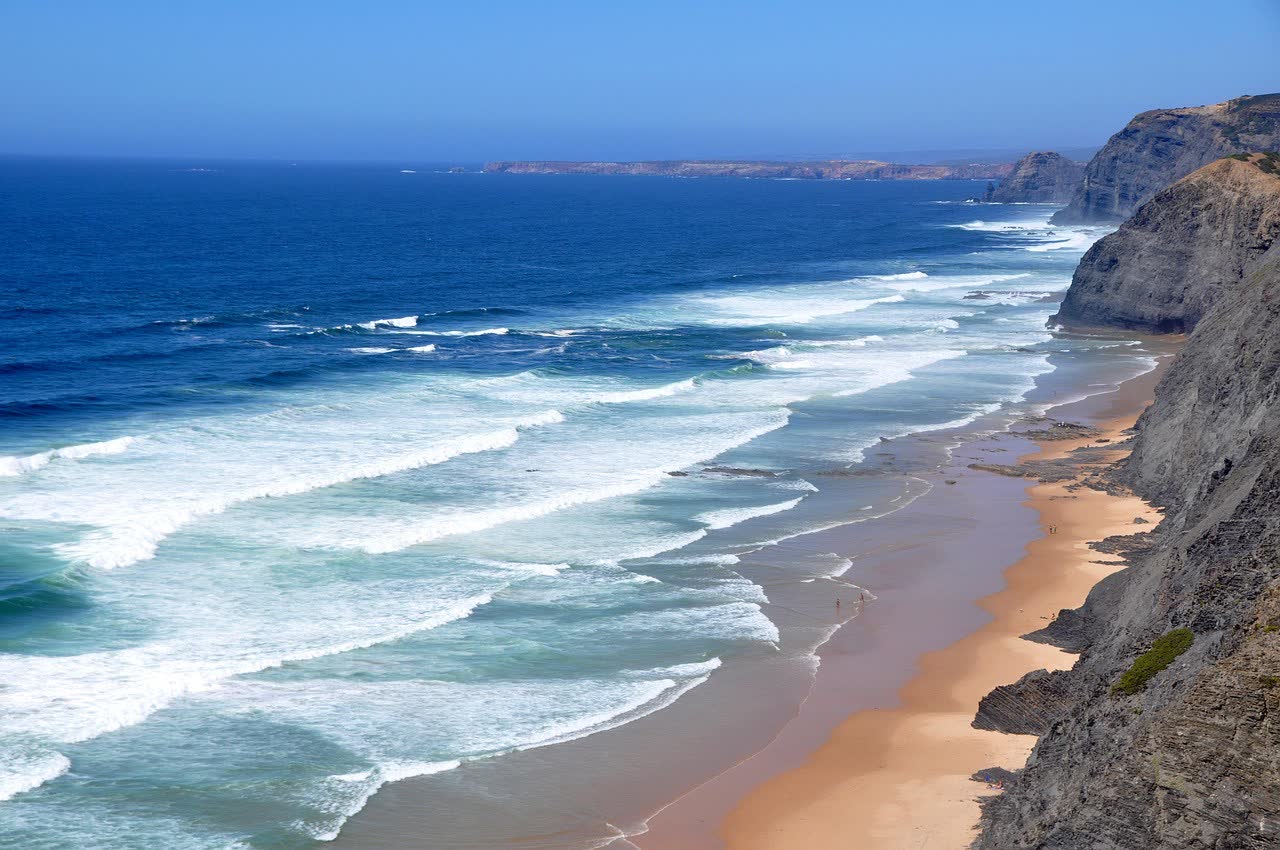
The region gets around 3,000 hours of sunshine a year, and most of its rain falls between November and February. Summer is long and dry, often running from late May well into October. That means the “best” time is really a trade-off between sea temperature, crowds and price.
The Algarve at a glance
| Season | Weather | Sea | Best for |
|---|---|---|---|
| Spring (Mar–May) | 19–25°C, mostly sunny | 16–18°C | Hiking, golf, wildflowers |
| Summer (Jun–Aug) | 28–30°C, almost no rain | 20–23°C | Beaches, boat trips, families |
| Autumn (Sep–Nov) | 27°C in Sept, cooler later | Warmest in Sept | Beaches, golf, fewer crowds |
| Winter (Dec–Feb) | 15–17°C, some rain | 15–16°C | Winter sun, walking, low prices |
These are typical coastal figures. Inland towns such as Silves and Loulé are hotter in summer and colder at night in winter. The sea on the west coast, north of Sagres, is usually 2 or 3 degrees cooler than in Tavira.
Spring (March to May)
Spring is a beautiful season. Wildflowers cover the clifftops, almond and orange blossom scent the air, the days are warm and sunny, and the beaches are quiet.
- Weather: around 19°C in March, rising to 24 or 25°C in May, with occasional showers early in the season.
- Hiking: the best time for coastal walks. See the Seven Hanging Valleys and Algarve hikes.
- Golf: see Algarve golf courses.
- Boat trips: calmer seas from May. See Algarve boat trips.
- Swimming: bracing until late May, so choose a hotel with a heated pool.
- Easter: busy with Portuguese and Spanish holidaymakers.
- Daylight: the clocks go forward on the last Sunday of March, giving long, light evenings from April.
- Prices: still well below summer rates, apart from Easter week. In 2027, Easter Sunday falls on 28 March.
Summer (June to August)
Summer is high season: guaranteed sunshine, the warmest seas, boat trips, beach bars and village festivals. It’s also the busiest and most expensive time, especially in August, the peak Portuguese holiday month.
- Weather: highs of 28 to 30°C, hotter inland, with warm nights around 20°C and almost no rain.
- The sea: warmest in the eastern Algarve, cooler on the west coast. See east vs west Algarve.
- Things to do: beaches, Benagil boat trips in the calm mornings, water parks and Zoomarine. See the best Algarve beaches and water parks.
- Festivals: village festas, medieval fairs and food festivals.
- Nightlife: see Algarve nightlife. In Albufeira, since the end of May 2026, bars close at 3am and clubs at 5am, and the town fines bad behaviour in the street (about €300 to €1,500).
- Avoiding crowds: go to the beach early, head east to Tavira’s islands or west to the Costa Vicentina, or travel in June or September instead.
- Safety: avoid the midday sun, never sit beneath cliffs, and follow wildfire warnings inland.
- Heatwaves: inland temperatures can pass 40°C for a few days at a time. The coast is usually cooler thanks to the sea breeze.
- Booking: for July and August, book flights, hire cars and family rooms months ahead. Prices rise sharply in the first half of August.
Autumn (September to November)
Autumn may be the Algarve’s best-kept secret. The sea is at its warmest in September, crowds and prices drop after the school holidays, and the weather stays warm well into October.
- Weather: around 27°C in September, 23°C in October with occasional rain, and milder and wetter in November.
- Beaches and kayaking: see kayaking in Portugal.
- Golf: peak golf season.
- Birdwatching: migrating birds of prey over Sagres in early autumn. See Sagres.
- Note: some beach bars and boat trips reduce their schedules from October.
- Lifeguards: the official bathing season at most beaches usually ends in late September or mid-October, so many beaches are unguarded later in the autumn even when it’s hot.
- Daylight: the clocks go back on the last Sunday of October, and by November it gets dark at around 5:30pm.
Winter (December to February)
Winter is mild and often sunny, with very few crowds and low prices. It’s popular with golfers, walkers and long-stay visitors escaping northern winters. See the Algarve in winter, which includes rainy-day ideas.
Expect around 16°C by day and 8 to 10°C at night, with rain coming in bursts of a few days. December is usually the wettest month. Christmas and New Year are busier, especially Albufeira and Lagos for New Year’s Eve.
Month by month
- January: mild, quiet, almond blossom starting late in the month.
- February: almond blossom and Carnival in Loulé. See Loulé.
- March and April: wildflowers, warm days and Easter.
- May: warm and quiet, one of the best months.
- June: summer weather with fewer crowds than July and August.
- July and August: peak heat, crowds and prices.
- September: the warmest sea and calmer beaches.
- October: still warm, ideal for golf and walking.
- November and December: quiet, mild and cheap.
Festivals and events
Big events can be a reason to go, or a reason to book early. These are the main ones, with 2026 dates where they are confirmed. Dates change each year, so check before you plan around them.
- Loulé Carnival (February): the Algarve’s biggest carnival parade, over Carnival weekend.
- Festival MED, Loulé (late June): world music in the old town, held on 25 to 28 June in 2026.
- Silves Medieval Fair (August): the castle town dresses up for jousting, markets and banquets. It ran from 7 to 15 August in 2026.
- Festival do Marisco, Olhão (August): a big seafood festival with nightly concerts on the waterfront, held on 10 to 15 August in 2026.
- Festival F, Faro (early September): music across Faro’s old town, held on 3 to 5 September in 2026.
- Festival da Batata-Doce, Aljezur (late November): a free festival of the local sweet potato.
Best time for...
- Swimming: July to September.
- Boat trips and Benagil: May to October, when the sea is calmer.
- Golf: spring and autumn.
- Families: June and September. See the Algarve with kids.
- Budget: November to March. See the Algarve on a budget.
- Surfing: autumn to spring on the west coast, when the Atlantic swells arrive. See surfing in Portugal.
- Walking: February to May and October to November, when it’s cool enough for long trails.
- Photography: spring, for wildflowers on the clifftops and clear air.
FAQ
What is the hottest month in the Algarve?
July and August, with coastal highs of about 28 to 30°C. Inland towns are hotter, and heatwaves can push them past 40°C for a few days.
When is the sea warmest in the Algarve?
Usually in August and September, at about 21 to 23°C on the south coast. The east, around Tavira, is warmest, and the west coast stays a few degrees cooler.
Is October a good time to visit the Algarve?
Yes. Days are usually around 23°C, the sea still holds some summer warmth and prices drop. Expect the odd rainy day, fewer lifeguards and shorter boat trip schedules.
When is the rainy season in the Algarve?
Most rain falls between November and February, and December is usually the wettest month. June to August is almost completely dry.
Plan your trip
See how many days in the Algarve and where to stay in the Algarve. For the rest of the country, see the best time to visit Portugal.
Getting there is easy all year: Faro airport has flights from across Europe, with more routes in summer. The A22 motorway along the coast has been toll-free since January 2025, and the railway line has run electric trains from end to end since July 2026. See getting around the Algarve.
Prices and details change, so please double-check before you travel. Spotted something out of date? Tell us in the groups.
Still got questions?
Ask 305,000+ travellers and locals in our free Facebook groups.