
Trip guides / Planning
Pharmacies in Portugal: Hours, Night Duty and Prescriptions
Portuguese pharmacies are often the best first stop for a minor health problem on holiday. Pharmacists can advise on small ailments, many medicines are sold without a prescription, and a rota of duty pharmacies covers nights, weekends and holidays. This guide goes deeper than our healthcare guide for tourists.
Quick answer: look for the word Farmácia, usually with a green cross. Most pharmacies must open at least 10am to 1pm and 3pm to 7pm on weekdays. Out of hours, a duty pharmacy (farmácia de serviço) provides cover: check the rota posted at any pharmacy or call 1400. It can add up to €2.50 per person. Antibiotics need a prescription. In an emergency, call 112.
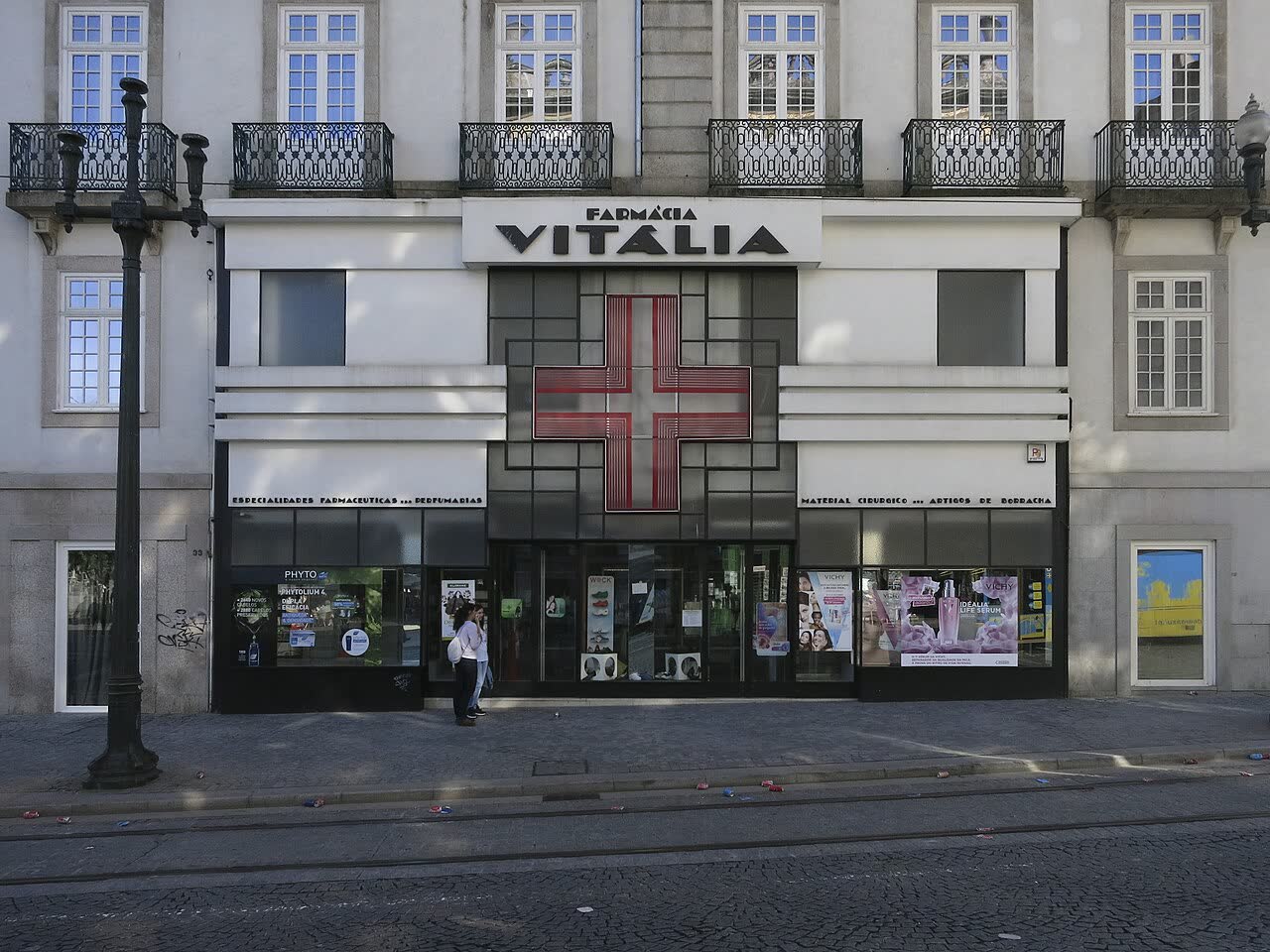

How to spot a pharmacy
Look for a sign reading Farmácia, usually with a green cross. In 2026, Portugal had about 2,920 pharmacies, plus some 200 smaller pharmacy posts (postos farmacêuticos). A parafarmácia is different: it can’t sell prescription medicines.
Normal opening hours
Each pharmacy sets its own hours within legal minimums. Most must open at least 44 hours a week, including 10am to 1pm and 3pm to 7pm on weekdays.
- Lunchtime: pharmacies don’t have to open between 1pm and 3pm, so some smaller ones close for lunch.
- Weekends and holidays: there’s no minimum Saturday opening, and pharmacies don’t have to open on Sundays or holidays, so rely on the duty rota. See Portugal’s public holidays.
- Checking hours: every pharmacy must display its hours, and the SNS website and INFARMED, the medicines authority, publish them.
Duty pharmacies
Outside normal hours, pharmacies take turns to cover. The one on duty is the farmácia de serviço (or de turno). On the mainland, rules updated in December 2025 set the minimum:
- Towns with an emergency department: at least one pharmacy must give permanent cover, serving customers in person around the clock.
- Other towns: a duty pharmacy covers from closing time until 9am.
- Small rural municipalities: the local duty pharmacy only covers until two hours after the health centre closes. After that, the nearest one may be in another town.
- The hatch: after closing time, a duty pharmacy can keep its doors shut and serve you through a hatch (postigo).
- The extra charge: up to €2.50 per person, but not for items on a prescription dated that day or the day before. The pharmacy must tell you before you pay.
How to find the duty pharmacy
- Any pharmacy door: every pharmacy must always display the duty rota and the pharmacy helpline where the public can see them, so check the nearest one, even if it’s closed.
- Linha 1400: a 24-hour pharmacy line that directs you to the nearest pharmacy able to help. Calls are free from 7pm to 9am and all day at weekends and on national holidays, and cost €0.10 a minute on weekdays from 9am to 7pm.
- Online: the line’s website, 1400safe.pt, lists duty pharmacies by district and municipality.
- SNS 24 (808 24 24 24): the national health line (press 9 for English) advises if you’re unsure whether you need a pharmacy, a doctor or a hospital. Madeira and Porto Santo use 800 24 24 20, and the Azores 808 24 60 24.
What pharmacists can help with
Many locals start here: in a 2026 Nova SBE study, 57.2% of Portuguese people went to a pharmacy first for mild symptoms.
- Minor problems: describe symptoms such as a sore throat, a cold, sunburn or insect bites, plus any allergies, pregnancy or medicines you take. The pharmacist can suggest a treatment or tell you to see a doctor.
- Pharmacy-only medicines: some medicines (MNSRM-EF) don’t need a prescription but are only sold in pharmacies, with the pharmacist following an official protocol.
- Your usual medicine: show the box. Brand names differ between countries, so the common name of the active ingredient matters most.
What you can buy without a prescription
Non-prescription medicines are called medicamentos não sujeitos a receita médica (MNSRM). Their prices aren’t fixed.
- Painkillers: paracetamol is sold as generics and under brand names such as Ben-u-ron, whose 500 mg tablets don’t need a prescription.
- Everyday remedies: throat lozenges, antiseptics, skin creams and anti-inflammatory gels all featured in DECO PROteste’s 2026 price survey.
- Prices: in that survey, the same pack of 20 generic paracetamol 500 mg tablets cost from €0.99 to €2.70, and pharmacies tended to be the most expensive.
- Safety: read the leaflet and stick to the dose. DECO PROteste advises seeing a doctor if symptoms persist.
What needs a prescription
Prescription-only medicines are sold only in pharmacies, against a prescription (receita). That includes antibiotics: the UK government’s travel advice warns of strict rules on dispensing them. For a prescription, see a doctor at a health centre (centro de saúde) or private clinic.
Prescriptions from other countries
- EU prescriptions: recognised if the medicine is authorised in Portugal and the prescription shows your full name and date of birth, the date, the doctor’s details and signature, and the medicine’s common name, strength and dosage.
- Limits: medicines needing a special prescription in Portugal are excluded, and pharmacists can refuse prescriptions they genuinely doubt.
- E-prescriptions: few work across borders, so ask your doctor for a paper copy.
- Paying: you may pay full price, then claim it back at home if your insurer covers the medicine. Ask for a receipt.
- UK and non-EU prescriptions: the UK government says UK prescriptions aren’t recognised, and Portugal’s recognition rules only cover EU ones. Plan to see a local doctor.
Farmácia, parafarmácia or supermarket?
Since 2005, non-prescription medicines can also be sold in places registered with INFARMED.
- Farmácia: the only place for prescription and pharmacy-only medicines, and the only kind on the duty rota.
- Parafarmácia: a registered one can sell non-prescription medicines, supervised by a pharmacist or pharmacy technician, and must display its INFARMED registration number.
- Supermarket health corners: health spaces such as Wells and those linked to Pingo Doce, Auchan and El Corte Inglés usually had the lowest prices in DECO PROteste’s survey. See supermarkets in Portugal.
- Behind the counter: outside pharmacies, medicines can’t sit on open shelves, and they can’t be sold to under-16s.
Bringing your own medicines
- Pack extra: bring enough for the trip plus a few spare days, and keep essentials in your hand luggage. See the Portugal packing list.
- Original packs: keep medicines in their original packaging, with the leaflet and any pharmacy label.
- Paperwork: INFARMED suggests a copy of your prescription and a doctor’s letter, ideally in English, listing medicines by their international common names.
- Controlled medicines: Schengen residents taking a narcotic or psychotropic medicine should ask their health authority about a Schengen certificate (one per medicine, up to 30 days). Others should ask a Portuguese embassy or consulate.
Useful Portuguese words
- Qual é a farmácia de serviço? Which is the duty pharmacy?
- Receita: prescription.
- Tem alguma coisa para…? Do you have something for…? Add a tosse (a cough), a febre (a fever) or o enjoo (nausea or travel sickness).
- Sou alérgico / alérgica a…: I’m allergic to… (masculine / feminine).
- Comprimidos, xarope, pomada: tablets, syrup, ointment.
More basics are in Portuguese phrases.
When to see a doctor or go to hospital
- Emergencies: call 112.
- No improvement: if symptoms persist, or the pharmacist says so, see a doctor. Our healthcare guide explains when to call SNS 24 first and what care costs.
- Insurance: keep pharmacy receipts for any claim. See travel insurance for Portugal.
FAQ
Can I buy antibiotics over the counter in Portugal?
No. Antibiotics need a doctor’s prescription. See a doctor at a health centre or private clinic, or call SNS 24 for advice.
Are pharmacies open on Sunday in Portugal?
They don’t have to be, but the duty rota provides cover, and a few pharmacies open every day. Check the rota posted at any pharmacy, or call 1400.
How do I find a 24-hour pharmacy in Portugal?
Towns with an emergency department must have a pharmacy on permanent duty. The rota posted at every pharmacy, Linha 1400 and 1400safe.pt show which one.
Why did a pharmacy charge me extra at night?
Duty pharmacies can add up to €2.50 per person, except for items on a prescription dated that day or the day before. They must tell you first.
Can a Portuguese pharmacy use my prescription from home?
EU prescriptions are recognised if the medicine is authorised in Portugal. UK prescriptions aren’t, and the rules don’t cover other non-EU countries, so see a local doctor.
More: Portugal for older travellers, Portugal with a baby and is Portugal safe?
Prices and details change, so please double-check before you travel. Spotted something out of date? Tell us in the groups.
Still got questions?
Ask 305,000+ travellers and locals in our free Facebook groups.