
Trip guides / Planning
Sao Martinho Day in Portugal 2026: Chestnuts and New Wine
São Martinho, or St Martin’s Day, falls on 11 November and is one of Portugal’s best-loved autumn traditions. It’s the day for roasted chestnuts, new wine and magustos, chestnut parties held in villages, schools and town squares. Here’s what it is, where to join in and what’s on in 2026.
Quick answer: São Martinho is on 11 November, which in 2026 is a Wednesday. It is not a public holiday, so shops and offices open as normal. People celebrate with roasted chestnuts, água-pé and jeropiga, and the first taste of the new wine. The biggest event around it is the Golegã Horse Fair, from 6 to 15 November 2026.
What is São Martinho?
It’s the feast day of St Martin of Tours, a Roman soldier who became bishop of Tours, in France, in the 4th century. He died in November 397 and was buried on 11 November, which became his feast day. In Portugal, the date falls in the chestnut harvest, just as the year’s wine is ready to taste, so it’s as much a food and drink festival as a religious one.
- Date: 11 November every year. In 2026 it’s a Wednesday, so many parties and fairs are held on the weekends either side.
- Holiday? No. It isn’t one of Portugal’s 13 national holidays. A few towns where Martin is the patron saint, such as Penafiel and Alijó, take a local holiday. See Portugal public holidays.
- Not the town: São Martinho do Porto is a seaside town on the Silver Coast with a shell-shaped bay. For that, see the São Martinho do Porto guide.
The legend of the cloak
The story is set on a cold, wet winter’s day. Martin, a soldier on horseback, met a beggar shivering with cold. With nothing else to give, he cut his cloak in two with his sword and handed the man half.
The legend says the dark clouds cleared at once and the sun came out, and in some versions the fine weather lasted three days. That night, Christ appeared to Martin in a dream, wearing the half-cloak. At the time, Martin had not yet been baptised.
The Verão de São Martinho
The legend explains the Verão de São Martinho, or St Martin’s summer: a spell of dry, sunny, surprisingly mild weather around 11 November. Portugal’s weather institute, IPMA, describes it as a feature of the climate across southern Europe, from Iberia to Greece and out to the Azores.
- Why it happens: around the first ten days of November, the westerly winds high in the atmosphere tend to slow down, which can block Atlantic weather fronts for a few days.
- Is it guaranteed? No. IPMA describes an average pattern, not a fixed event, so pack layers and a raincoat.
Magustos: chestnut parties
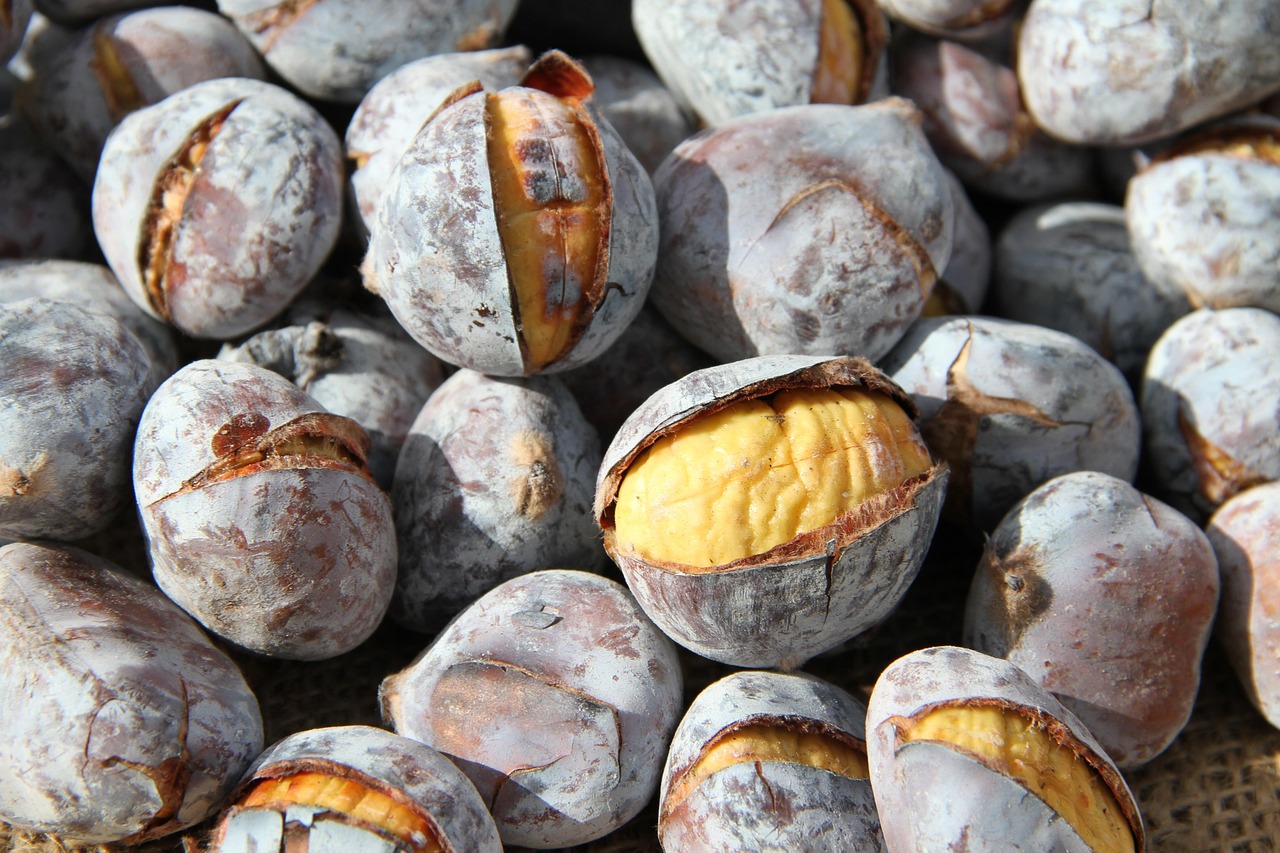
A magusto is a chestnut feast around a bonfire. Traditionally, chestnuts were roasted outdoors over a fire of dry brambles and eaten on the spot with wine. In some villages, part of the fun was smearing each other’s faces with soot from the embers.
- Who holds them: parish councils, schools and local associations, on or around 11 November.
- Origins: folklorists link magustos to All Saints’ Day (1 November), when chestnut meals were part of the customs for the dead. That’s why you’ll hear of both “magustos dos Santos” and “magustos de São Martinho”.
- The saying: “No dia de São Martinho, pão, castanhas e vinho” (on St Martin’s Day, bread, chestnuts and wine).
Roasted chestnuts in the cities
From October, smoky street carts selling castanhas assadas appear in Lisbon, Porto, Coimbra and other cities. In Porto, the metro even rents out pitches for chestnut sellers at stations such as Trindade, from mid-October to mid-May.
- Price: roughly €2.50 to €4 a dozen. In October 2026, a seller in Coimbra was still charging €2.50. In Lisbon, most carts charged €3.50 in late 2025, and a few near the Colombo shopping centre asked €4.
- Where in Lisbon: busy squares and metro exits such as Rossio, Restauradores, Marquês de Pombal and Cais do Sodré.
New wine: água-pé and jeropiga
São Martinho is also the first taste of the year’s wine, summed up in the saying “No dia de São Martinho, vai à adega e prova o vinho”: on St Martin’s Day, go to the cellar and taste the wine. Two traditional drinks go with the chestnuts.
- Água-pé: water is poured over the grape skins left after pressing to draw out the last of the juice. The result is a light drink, sometimes served while it’s still fermenting.
- Jeropiga: grape must with aguardente (grape spirit) added to stop the fermentation, so it’s sweeter and stronger than wine. Sip it slowly.
- Talha wine: in the Alentejo, São Martinho is traditionally when the big clay pots (talhas) of new wine are opened. See Portugal’s wine regions.
The Golegã Horse Fair
The biggest event of the São Martinho season is the Feira Nacional do Cavalo in Golegã, a small town in the Ribatejo known as the capital of the horse. It began in the mid-18th century as the Feira de São Martinho and took its current name in 1972.
- 2026 dates: 6 to 15 November, the 50th edition, together with the 27th International Lusitano Horse Fair.
- What happens: riders in traditional dress show off Lusitano horses at the Largo do Arneiro fairground, with competitions, shows and a closing parade of stallions.
- 11 November: the programme includes a procession of pilgrims (romeiros), a midday blessing at the parish church and their arrival at the Arneiro. Chestnuts and água-pé are part of the experience.
- Cost: entry to the fairground is free, but some shows are ticketed.
- Heritage: in October 2026, the fair was added to Portugal’s national inventory of intangible cultural heritage.
Chestnut fairs and other events in 2026
Most chestnut fairs are in the north and centre of the country. These have confirmed 2026 dates:
- Marvão (14–15 November): the Festa do Castanheiro – Feira da Castanha, the Alentejo’s best-known chestnut fair. Entry was €2 in 2025, and a chestnut food fortnight follows until 29 November. See Marvão.
- Lousã (20–22 November): the Feira do Mel e da Castanha, a honey and chestnut fair in the Coimbra district.
- Penafiel (10–20 November): the Feira de São Martinho, the town’s patron saint’s fair east of Porto, with 11 November as the high point.
- Portimão (6–15 November): the Algarve’s Feira de São Martinho, held since 1662, with rides, roasted chestnuts, farturas and stalls at the city’s fairground. See things to do in Portimão.
- Earlier in the season: Trancoso’s Feira da Castanha e Paladares de Outono (30 October–1 November) and Góis’s Feira dos Santos, do Mel e da Castanha (31 October–1 November).
Programmes can change, so check the town hall’s website or social media pages before you travel.
FAQ
Is São Martinho a public holiday in Portugal?
No. 11 November is a normal working day in most of the country. A few municipalities, including Penafiel and Alijó, take it as their local holiday.
What is a magusto?
A chestnut party around a bonfire, held around São Martinho or All Saints’ Day, with wine, água-pé or jeropiga.
What is the difference between água-pé and jeropiga?
Água-pé is made by pouring water over pressed grape skins, so it’s light. Jeropiga is grape must fortified with grape spirit, so it’s sweeter and stronger.
When is the Golegã Horse Fair in 2026?
From 6 to 15 November 2026, with São Martinho on 11 November in the middle. Check the official programme for show times.
How much do roasted chestnuts cost in Portugal?
Usually about €2.50 to €4 a dozen from street carts, with the higher prices in Lisbon.
More: Portugal in November, Portugal’s festivals calendar and what to eat in Portugal.
Prices and details change, so please double-check before you travel. Spotted something out of date? Tell us in the groups.
Still got questions?
Ask 305,000+ travellers and locals in our free Facebook groups.