
Porto Walking Tours: The Best Free and Paid Tours (2026)
Porto’s steep, tangled old town is perfect for exploring on foot with a local guide who knows the shortcuts, the stories and the best places to eat. Here are the best walking tours in Porto, from the classic historic centre to food, port wine and street art.
Quick answer: start with a historic centre walking tour covering São Bento, the cathedral, Ribeira and Clérigos. Then add a food tour or a port wine tour in Gaia. Tip-based tours are good value, while paid small-group tours are more personal. See Porto walking tours.
Why take a walking tour
Porto is compact, but its lanes twist up and down steep hills and it’s easy to miss things. A guide links the sights together, explains the history and saves you from climbing the same hill twice. Most visitors find that a tour on the first day makes the rest of the trip easier, as you pick up tips on food, transport and what to skip.
A guide also fills in the story behind what you see: why the houses in Ribeira are so narrow and tall, how the port trade shaped the city, and why people from Porto are nicknamed tripeiros (tripe eaters). That kind of local colour is hard to get from a guidebook.
Types of walking tour
Historic centre
São Bento station, the cathedral, the medieval lanes down to Ribeira, the Bolsa and the Clérigos area. Expect to see the blue-and-white tiles in São Bento’s entrance hall, the view from the cathedral terrace and the riverside houses of Ribeira, part of a UNESCO World Heritage Site since 1996. Most tours last about two to three hours and stop outside the sights rather than going in. See Porto in one day and the Clérigos Tower guide.
Some routes also take in the Avenida dos Aliados with its grand city hall, the Rua das Flores shopping street and the São Francisco church, whose gilded interior is one of the most lavish in Portugal. If you want to go inside places like the Bolsa or Clérigos, plan to come back after the tour, as entry usually isn’t included. See the Baixa and the Palácio da Bolsa.
Food tours
Francesinha, bifanas, cheese, sardines and pastries. Food tours usually last three to four hours and include several tasting stops, so come hungry and skip a big breakfast. Tell the company about allergies or a vegetarian diet when you book. See Porto food tours. See what to eat in Porto.
Port wine
Walks across the bridge to the Gaia lodges for tastings. You usually cross the lower deck of the Dom Luís I Bridge, visit one or two cellars and learn the difference between ruby, tawny and white port. See port tours. See the best port cellars.
The lower deck has been closed to private cars since 2023, so the walk across is calmer than it used to be. You share it with buses, taxis and other pedestrians.
Street art and alternative Porto
Murals, creative districts and local stories. These walks often take in the galleries and independent shops around Rua de Miguel Bombarda, plus large murals around the centre. See Cedofeita.
Photography
Guided walks to the best viewpoints and photo spots. Early-morning and sunset slots give the best light and fewer crowds. See Porto’s best photo spots.
Tip-based or paid tours?
- Tip-based tours: you pay what you think the tour was worth at the end. Groups can be large, but guides work hard for their tips. Bring cash.
- Paid small-group tours: fewer people, easier to ask questions, and often include tastings or entry fees. Check what’s included before you book.
- Private tours: the best choice for families, people with limited mobility or anyone with special interests, as the guide can adjust the route and pace.
A self-guided half-day route
If you’d rather go alone, start at São Bento, walk up to the cathedral, then wind down through the old lanes to Ribeira. Cross the lower deck of the bridge to Gaia for a port tasting, then ride the cable car or walk up to Jardim do Morro for the view back across the river. Allow about four hours with stops. See Ribeira.
To get back, cross the upper deck on foot or take the metro (line D) one stop to São Bento.
Getting around between walks
- Metro: São Bento, Aliados and Trindade are the handiest stations for tour meeting points. See Porto public transport.
- Guindais funicular: it has been suspended since July 2026, so don’t count on it to get from Ribeira up to Batalha. Walk, or use the metro over the upper deck.
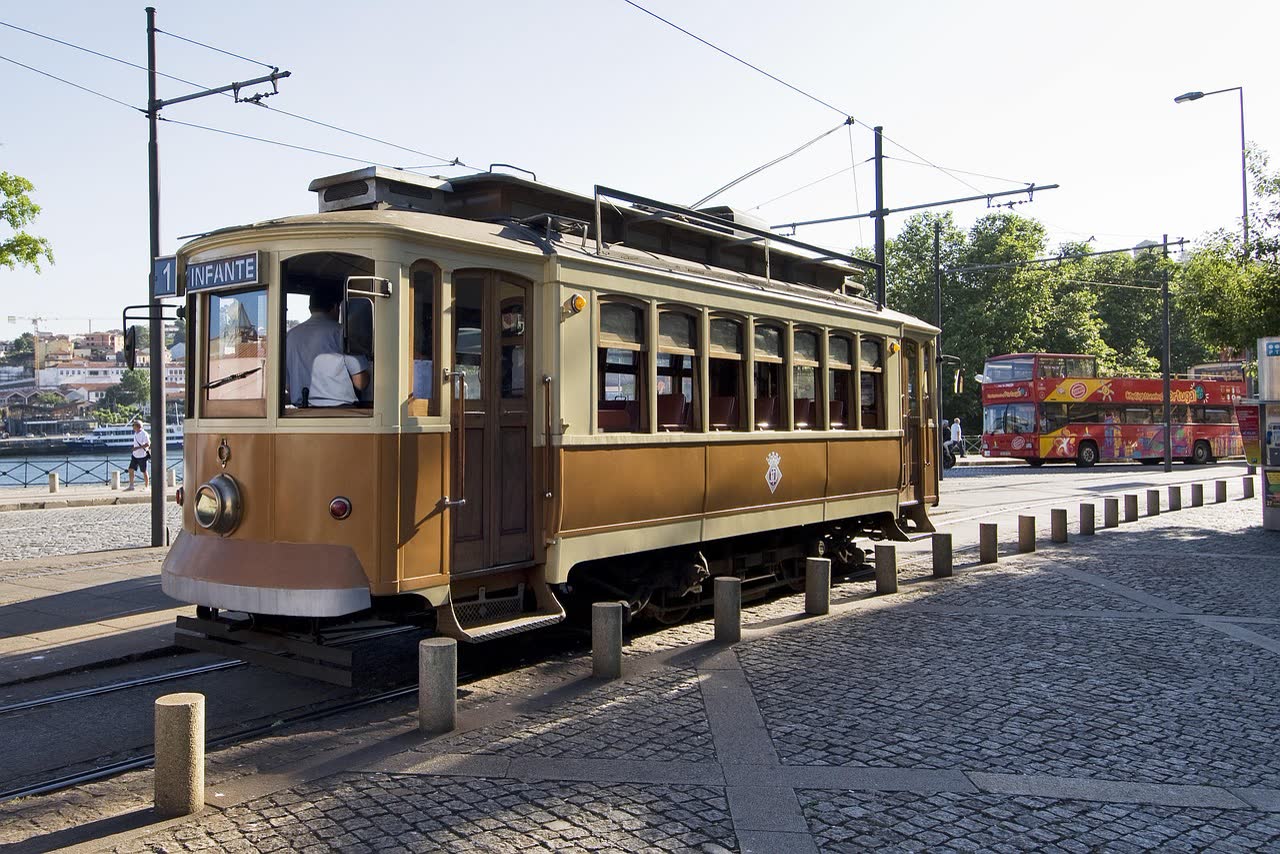
- Historic tram 1: runs along the river from near São Francisco church towards Foz, a pleasant way to rest your legs after a morning on foot.
- Taxis and ride-hailing: cheap for short hops up the hills, and useful at the end of a long day.
When to go
Spring and autumn are the most comfortable months for walking. Summer afternoons can be hot on the hills, so choose a morning tour. Winter is quieter but often wet. June is lively, with the São João festival on the night of 23 June. See the best time to visit Porto.
Tips
- Hills and stairs: wear comfortable shoes with good grip, as the granite cobbles get slippery when wet.
- Book a tour early in your trip for orientation and tips.
- Rain: tours usually run in light rain, so bring a jacket.
- Water: carry a bottle in summer.
- Meeting points: check the exact spot the day before, as many tours start near Aliados or São Bento.
- Prefer a boat? See the six bridges cruise.
FAQ
How long is a Porto walking tour?
A historic centre tour usually lasts about two to three hours. Food tours run for about three to four hours because of the tasting stops.
Are free walking tours in Porto really free?
There’s no fixed price, but you’re expected to tip the guide at the end, based on what you think the tour was worth. Bring cash, as not every guide takes cards.
Is Porto hard to walk around?
It’s compact but very hilly, with steep lanes and steps between the upper town and the river. Good shoes, rest stops and the metro over the upper deck of the bridge make it much easier.
Do walking tours go inside the sights?
Most historic centre tours stop outside and explain the history, without paying for entry. Plan to return to places like Clérigos, the cathedral cloister or the Bolsa afterwards.
More: the best tours in Porto and things to do in Porto.
Some links in this guide are affiliate or referral links (GetYourGuide, Booking.com, Discover Cars, Welcome Pickups, Airalo, Yesim, Saily, Tiqets, Radical Storage, EKTA, AirHelp, Uber). If you book or sign up through them we may earn a small commission or ride credit at no extra cost to you. It helps keep our groups and this site free.
Still got questions?
Ask 305,000+ travellers and locals in our free Facebook groups.