
Visiting the Palacio da Bolsa in Porto
Behind the sober façade of Porto’s former stock exchange is one of the city’s most lavish interiors, including the dazzling Arab Room inspired by the Alhambra. The Palácio da Bolsa can only be seen on a guided tour. Here’s how to visit.
Quick answer: visits are by guided tour only (about 30 to 45 minutes), in several languages. Tours sell out in busy months, so book a time slot in advance. The palace is next to the São Francisco church, just above Ribeira. See Palácio da Bolsa tickets.

Why go
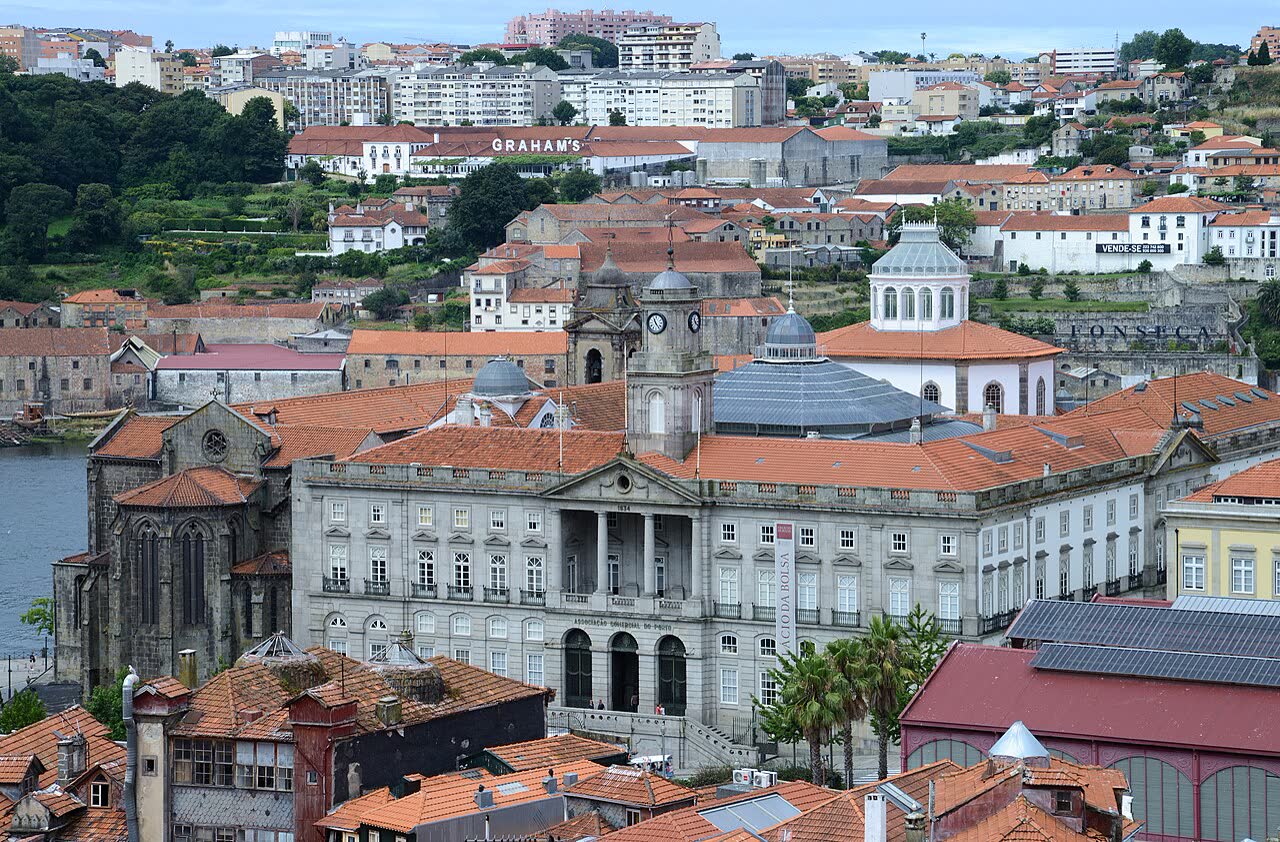
From the street, the Bolsa looks like a plain, grand government building. Inside, room after room gets richer, and the tour ends in a gold-covered hall that most visitors don’t expect. It is one of the best indoor sights in Porto, it takes under an hour, and it sits right on the route between the Ribeira waterfront and the city centre. It is a good choice on a rainy day. See Porto on a rainy day.
About the palace
Porto’s merchants built the Palácio da Bolsa in the 19th century as the home of the city’s Commercial Association. It stands on the site of the cloister of the São Francisco convent, which was destroyed by fire during the siege of Porto in the early 1830s, in the Liberal Wars. With no exchange building, traders had been doing business in the open street.
The first stone was laid in 1842, to a neoclassical design by the architect Joaquim da Costa Lima. The decoration went on for decades and was finished in 1909, in time for a visit by King Manuel II. It was designed to impress foreign traders, and it still hosts official receptions and events. It lies within the UNESCO-listed historic centre.
The building is still owned and used by the Commercial Association of Porto, which is one reason you can only go in with a guide. The stock exchange itself moved out long ago, but business meetings, conferences and concerts still take place in its halls.
What you’ll see
- The Hall of Nations: a courtyard under a glass dome decorated with the coats of arms of Portugal’s trading partners. The tour usually starts here. This was the trading floor. Look down at the patterned floor tiles as well as up at the dome.
- The grand staircase of granite and marble, rising from the Hall of Nations to the upper floor. Look up at the decorated ceiling and the large bronze chandeliers.
- The courtroom and meeting rooms with carved wood and paintings. The old commercial court shows how the merchants settled their disputes in style.
- Other rooms: depending on the day and any events, the route may include the Portrait Room and other meeting rooms with carved wooden panelling and period furniture.
- The Arab Room: the highlight, a gilded Moorish-revival hall inspired by Granada’s Alhambra. Designed by Gustavo Adolfo Gonçalves e Sousa, it took 18 years to complete and opened in 1880. The walls and ceiling are covered in gilded stucco and Arabic-style inscriptions. It is still used for official receptions for visiting heads of state, and it is sometimes used for concerts.
How the tour works
- Guided only: you can’t wander on your own. Groups go in at set times with a guide.
- Length: usually about 30 to 45 minutes. Allow an hour including the wait.
- Languages: tours run in several languages, usually including English, Portuguese, Spanish and French. English slots fill fastest.
- Hours: usually open daily, with longer hours from April to October and a lunch break in the winter months. Check the official schedule before you go.
- Tickets: buy at the entrance desk for the next free slot, or book online through the official Palácio da Bolsa website to pick a time. There are usually reduced prices for students and over-65s, and young children go free. Check current prices on the official site.
- Accessibility: there is a side entrance with a ramp, a lift suitable for wheelchairs and an accessible toilet. Mention it when you book.
Getting there
- On foot: about 10 minutes downhill from São Bento station. See São Bento station.
- By tram: the historic tram 1 starts at the Infante stop, a short walk away, and runs along the river to Foz. See Foz do Douro.
- By metro: São Bento (yellow line D) is the nearest station.
The entrance is on Rua Ferreira Borges, facing the gardens of Praça do Infante D. Henrique.
A half-day route
- Start at São Bento station to see its tiled hall.
- Walk down to the Bolsa for a morning tour.
- Next door, visit the gilded São Francisco church.
- Finish on the Ribeira waterfront for lunch, then walk across the lower deck of the Dom Luís I bridge to the port cellars in Gaia. See the Dom Luís I bridge.
Tips
- Book ahead: tours in English fill up quickly, especially from spring to autumn.
- Go early: if you plan to buy at the door, arrive near opening time to pick a slot in your language.
- Events: rooms may close for official functions, so check before you go.
- Photos: rules can vary by room, so ask your guide.
- Bags: keep luggage to a small day bag, as large bags can be awkward in a guided group.
- Combine with the gilded interior of São Francisco next door. See Porto’s churches.
- Then walk down to the river. See Ribeira.
FAQ
Can you visit the Palácio da Bolsa without a tour?
No. Entry is only on a guided tour, because the building is still in use for meetings and official events.
How long is the Palácio da Bolsa tour?
Usually about 30 to 45 minutes. Allow an hour including the wait for your slot.
Is the Palácio da Bolsa worth it?
Yes for most visitors. The Arab Room alone is one of the most striking interiors in Porto, and the tour is short and central.
Do you need to book in advance?
It’s wise from spring to autumn, especially for English tours. In quieter months you can usually buy at the door for a slot later the same day.
More: Porto museums, Porto in one day and things to do in Porto.
See also: São Francisco church.
Some links in this guide are affiliate or referral links (GetYourGuide, Booking.com, Discover Cars, Welcome Pickups, Airalo, Yesim, Saily, Tiqets, Radical Storage, EKTA, AirHelp, Uber). If you book or sign up through them we may earn a small commission or ride credit at no extra cost to you. It helps keep our groups and this site free.
Still got questions?
Ask 305,000+ travellers and locals in our free Facebook groups.