
Trip guides / Sintra and Cascais
Guincho Beach: Wild Coast Near Cascais
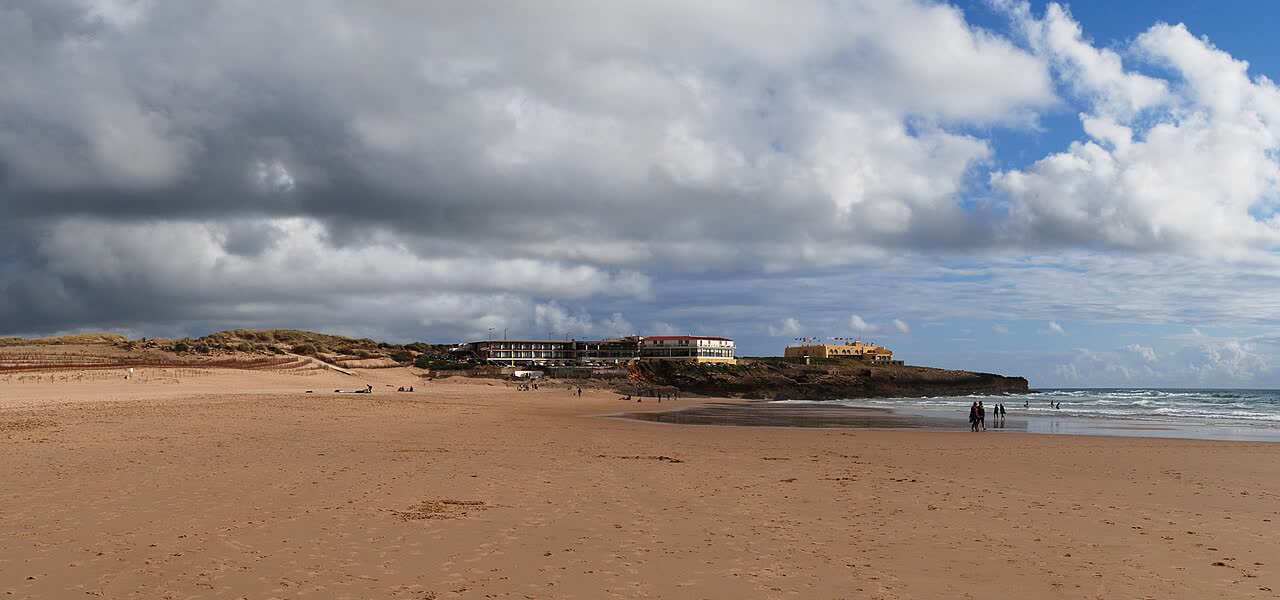
Guincho is the wild beach of the Lisbon coast: a long sweep of sand and dunes backed by the green Sintra hills, pounded by Atlantic waves and swept by strong winds. It’s a magnet for surfers, windsurfers and kitesurfers, and one of the most beautiful spots near Lisbon.
Quick answer: Guincho is about 10 minutes’ drive from Cascais, along the coast road. Come for the scenery, sunset, surf and kitesurfing, and seafood at the restaurants nearby. Swimming is risky because of strong currents and waves, so only swim if lifeguards are on duty and conditions are calm.

Why go
Guincho feels far from the city even though Lisbon is less than an hour away. There are no tower blocks, just sand, dunes and the Sintra hills, protected as part of the Sintra-Cascais Natural Park. The beach faces the open Atlantic, so the light is clear, the waves are big and the sunsets are some of the best on the coast. Film fans may know it already: it appears in the 1969 James Bond film On Her Majesty’s Secret Service.
What you’ll find
The beach is about 800 metres long. The northern end is a little more sheltered by the cliffs. The southern end is more exposed and is where most of the windsurfers and kitesurfers gather. On the headland at the south end stands an old coastal fort, now a hotel, which makes a handy landmark. Just to the south is the smaller Cresmina beach, with a boardwalk through the Guincho-Cresmina dunes.
The wind is the big story here. In summer a strong northerly wind blows on many afternoons, while winter brings big Atlantic swells that are often 1.5 to 3 metres high.
Things to do
- Walk the dunes and the long beach. The Cresmina boardwalk is an easy, flat loop with good views. Stick to the paths, as the dunes are fragile.
- Kitesurfing and windsurfing: the steady wind makes it a top spot for experienced riders. International competitions have been held here, including windsurfing World Cup events in the 1990s.
- Surfing: for confident surfers. Beginners should learn at gentler beaches like Carcavelos. See surf lessons.
- Sunset: one of the best on the coast. See the best sunset spots.
- Seafood: restaurants along the coast road serve fresh fish and shellfish.
- Cycle: the coastal cycle path runs from Cascais to Guincho. See cycling in Portugal.
- Cabo da Roca: the westernmost point of mainland Europe is a short drive north. The clifftop is free. Since July 2026 you can also visit the lighthouse with Parques de Sintra, for about 5 euros, or 10 euros with the climb to the top. See Cabo da Roca.
Getting there
- By car: the easiest way. It’s about 10 minutes from Cascais on the coast road and roughly 40 minutes from central Lisbon, traffic permitting. There’s parking along the road and in car parks near the beach, some of them paid. On sunny summer weekends spaces go early.
- By bike: the coastal cycle path from Cascais. It’s mostly flat, but the wind can make the ride back hard work. Cascais has bike hire.
- By bus: MobiCascais, the local Cascais bus network, runs from the bus terminal by Cascais station to Guincho, usually about once an hour. At the time of writing lines 5 and 15 serve the beach. Check the timetable on the MobiCascais website. To reach Cascais from Lisbon, take the CP train from Cais do Sodré.
- Evening trains: in 2026, works on the Cascais line mean trains between Cascais and Caxias are replaced by buses in the evenings, usually from about 9.50pm on weekdays and earlier at weekends. If you stay for sunset, allow extra time to get back to Lisbon.
How long to spend
An hour or two is enough for a walk and photos. Give it half a day if you want lunch, a dune walk and the sunset.
A half-day route
Take the train to Cascais in the afternoon. Cycle or take the bus to Guincho, walk the beach and the Cresmina boardwalk, then stay for sunset and a seafood dinner. Head back to Cascais by bus, taxi or ride-hailing app. With a car, add Cabo da Roca first. See the Cascais day trip for the rest of the day.
Food
The coast road between Cascais and Guincho is known for fish and seafood restaurants, from casual beach places to smart dining rooms. Try grilled fish of the day, clams, goose barnacles (percebes) and seafood rice. Prices can be high, as shellfish is often charged by weight, so ask before you order. See the Portuguese seafood guide.
When to go
Summer brings the most lifeguard cover, but also the strongest northerly wind on many afternoons, which is great for kitesurfers and less fun for sunbathers. Mornings are often calmer. Spring and autumn are good for walks and quieter car parks. Winter brings big swells that experienced surfers love.
Safety
- Currents: dangerous rip currents. Respect the flags.
- Wind: blowing sand can be unpleasant, so bring a windbreaker.
- Water temperature: the sea is cold all year. Surfers wear wetsuits even in August.
- Sun: the wind hides how strong the sun is. Use sunscreen.
- Out of season: lifeguards only cover the bathing season, which in 2026 ran until 30 September. Outside it, stay out of the water unless you are an experienced surfer.
FAQ
Can you swim at Guincho beach?
Only with care. Rip currents and big waves make it risky, so swim only when lifeguards are on duty and the sea is calm, and stay between the flags.
How do you get to Guincho without a car?
Take the train from Lisbon to Cascais, then a MobiCascais bus, usually about once an hour, or cycle the coastal path from Cascais.
Why is Guincho so windy?
The beach faces the open Atlantic with nothing to block the wind, and in summer a strong northerly wind blows on many afternoons. That’s why kitesurfers and windsurfers love it.
More: the best beaches near Cascais, Sintra and Cascais in one day and surfing in Portugal.
See also: Boca do Inferno.
Some links in this guide are affiliate or referral links (GetYourGuide, Booking.com, Discover Cars, Welcome Pickups, Airalo, Yesim, Saily, Tiqets, Radical Storage, EKTA, AirHelp, Uber). If you book or sign up through them we may earn a small commission or ride credit at no extra cost to you. It helps keep our groups and this site free.
Still got questions?
Ask 305,000+ travellers and locals in our free Facebook groups.