
Trip guides / Sintra and Cascais
The Best Beaches Near Sintra
Below the misty Sintra hills lies a wild stretch of Atlantic coast, with dramatic coves, surf beaches and cliff villages. It’s a great way to finish a day of palaces. Here are the best beaches on the Sintra coast.
Quick answer: the best Sintra beaches are Praia da Adraga (a cove with rock arches and a great fish restaurant), Praia Grande (a big surf beach with dinosaur footprints on the cliff and a huge seawater pool), Praia das Maçãs and Azenhas do Mar (pretty village beaches), and the wild Praia da Ursa near Cabo da Roca. A car makes them easy to reach.

Why go
Most people come to Sintra for the palaces and never see the sea. Yet the coast is only around 20 minutes’ drive from the town. It is part of the Sintra-Cascais Natural Park, so the cliffs are mostly free of big buildings. The beaches here feel very different from the calm bay at Cascais: the water is colder, the waves are bigger and the scenery is far wilder. After a morning of crowded palaces, an afternoon here is a real change of pace.
The water quality is good, too. In 2025, five Sintra beaches (Adraga, Praia Grande, Praia das Maçãs, Magoito and São Julião) won back the Blue Flag after a gap of 15 years.
The beaches
- Praia da Adraga: a stunning cove framed by cliffs and arches. At low tide you can walk round to sea caves and rock arches at the northern end. There is a long-running fish restaurant right on the sand. Parking is limited, so come early in summer. It faces west, so it’s one of the best sunset spots on this coast.
- Praia Grande: surf, a long beach, dinosaur footprints on the cliff at one end, and a huge seawater pool. The footprints date from the early Cretaceous, well over 100 million years ago, and you see them on a tilted rock face from a long staircase at the south end, with around 300 steps. Most are three-toed prints left by meat-eating dinosaurs walking on two legs. The pool belongs to a hotel above the beach and is about 100 metres long. Non-guests can usually buy a day ticket in the warmer months, with higher prices in July, August and at weekends, so check the hotel’s website first.
- Praia das Maçãs: a family-friendly village beach with cafes, restaurants and lifeguards in season. It is also the end of the line for the old Sintra tram.
- Azenhas do Mar: a clifftop village with an ocean pool. The white houses tumble down the cliff to a small beach and a rock pool that fills with seawater at high tide. The best photo is from the road just south of the village. See Azenhas do Mar.
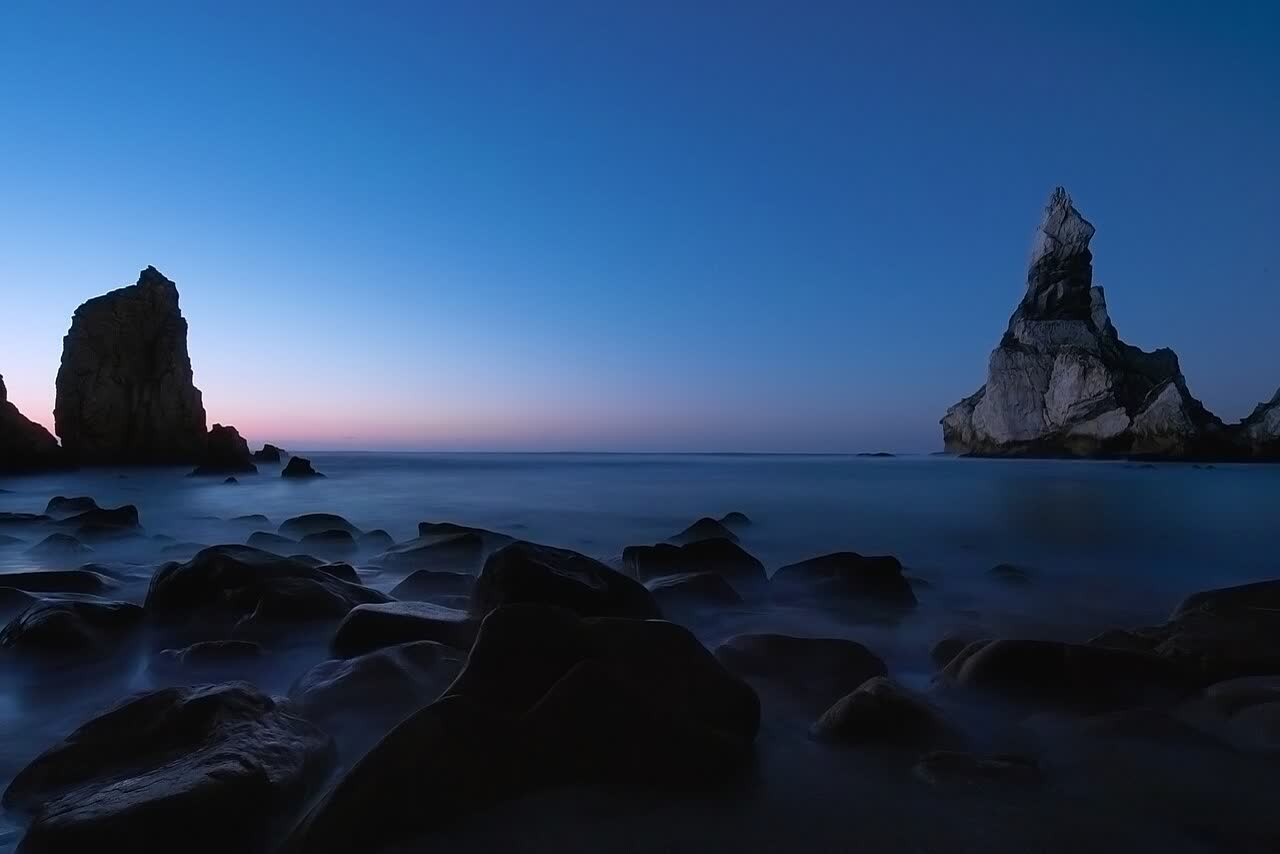
- Praia da Ursa: wild rock stacks below Cabo da Roca, reached by a steep and difficult path. There are no lifeguards, cafes or toilets. Swimming is dangerous. See Cabo da Roca.
More beaches if you have time
- Magoito and Aguda: quieter beaches north of Azenhas do Mar, below high cliffs. Both involve steps or a steep path down.
- São Julião: a wide beach on the border with Ericeira, popular with surfers. See Ericeira.
Getting there
- By car: about 20 minutes from Sintra town and 40 to 50 minutes from Lisbon. Parking near the smaller beaches fills up fast on summer weekends.
- By bus: Carris Metropolitana buses to the coast mostly leave from Portela de Sintra station, one stop before Sintra on the train line. Line 1254, for example, runs via Colares to Praia Grande, Praia das Maçãs, Azenhas do Mar and Magoito. Services are more frequent in summer, so check current times on the Carris Metropolitana website.
- By tram: the historic Sintra tram runs from near Sintra town to Praia das Maçãs in the warmer months, mostly on a limited timetable. The ride takes about 45 minutes. Check whether it is running before you plan around it.
- From Lisbon: take the train from Rossio to Sintra, then a bus. See Lisbon to Sintra.
A half-day route
- Start at Azenhas do Mar for the view.
- Swim or walk at Praia das Maçãs or Praia Grande, and climb to the dinosaur footprints.
- Finish with a late lunch or sunset at Adraga.
With a full day, add Cabo da Roca and the walk down to Praia da Ursa in the morning, while your legs are fresh.
Food
The beach restaurants here specialise in grilled fish, shellfish and seafood rice. In Sintra town, try the local pastries before you head down: travesseiros (puff pastry with almond and egg cream) and queijadas (small cheese tarts). The coastal village of Colares, on the way, is known for its rare wines grown in sand. The sandy soil kept out the phylloxera pest that wiped out most of Europe’s vines in the 19th century. The red is made mainly from the Ramisco grape. The Adega Regional de Colares, a wine co-operative founded in 1931, offers visits and tastings by booking.
When to go
- June to September: the only real swimming season, when lifeguards are on duty. Even then the sea is cold.
- Spring and autumn: good for walks and sunsets, with fewer people.
- Winter: big waves and dramatic scenery, but not for swimming.
Tips
- Atlantic waves: strong currents, so swim only where there are lifeguards.
- Fog: the coast can be misty when inland is sunny, and vice versa.
- Tides: check the tide times before walking round to the caves at Adraga, so you don’t get cut off.
- Bring a layer: the wind picks up in the afternoon.
- Cliffs: keep away from the edges and the base of the cliffs, where rocks can fall.
- Combine with Sintra and Cascais. See Sintra and Cascais in one day.
FAQ
Can you swim at the Sintra beaches?
Yes, in summer at lifeguarded beaches such as Praia Grande, Praia das Maçãs and Adraga. The water is cold and the currents are strong, so stay between the flags.
Which Sintra beach is best for families?
Praia das Maçãs, which has cafes, lifeguards in season and a bus link. Praia Grande is also good, and children love the seawater pool and the dinosaur footprints.
Can you reach the Sintra beaches without a car?
Yes. Carris Metropolitana buses run from Portela de Sintra station to Praia Grande, Praia das Maçãs and Azenhas do Mar, and the old tram runs to Praia das Maçãs in season. Adraga and Ursa are much harder without a car.
Is Praia da Ursa worth the hike?
For the views, yes, but the path is steep and loose, and there are no lifeguards or facilities. Wear proper shoes and don’t swim there.
More: the best beaches near Lisbon, Guincho and where to stay in Sintra.
Prices and details change, so please double-check before you travel. Spotted something out of date? Tell us in the groups.
Still got questions?
Ask 305,000+ travellers and locals in our free Facebook groups.