
Trip guides / Central Portugal
Conimbriga: Portugal's Best Roman Ruins
Conímbriga is the best-preserved Roman town in Portugal, with mosaic floors, houses, baths and a long defensive wall, set in the countryside just south of Coimbra. It’s a fascinating half-day for history lovers, and great for families too.
Quick answer: Conímbriga is about 20 minutes’ drive south of Coimbra, near Condeixa-a-Nova. A ticket covers the ruins and the museum. Allow 2 hours. Don’t miss the House of the Fountains, with its mosaics and working fountains. Combine it with Coimbra. See Coimbra tours.
.jpg)
Why go
Most Roman sites in Portugal are a few stones in a field. Conímbriga is a real town you can walk through, with streets, houses, baths and some of the finest mosaics in the Iberian Peninsula. People lived on this hilltop from around the 9th century BC. The Romans arrived in the 2nd century BC, and the town became a Roman municipality under Emperor Vespasian in the 1st century AD. Only about a tenth of the city has been dug up, so what you see is just a slice of it. It has been a National Monument since 1910.
The town even gave Coimbra its name. In the late 6th century the local bishop moved to nearby Aeminium, and the old name went with him. Over time, Aeminium became Coimbra.
What to see
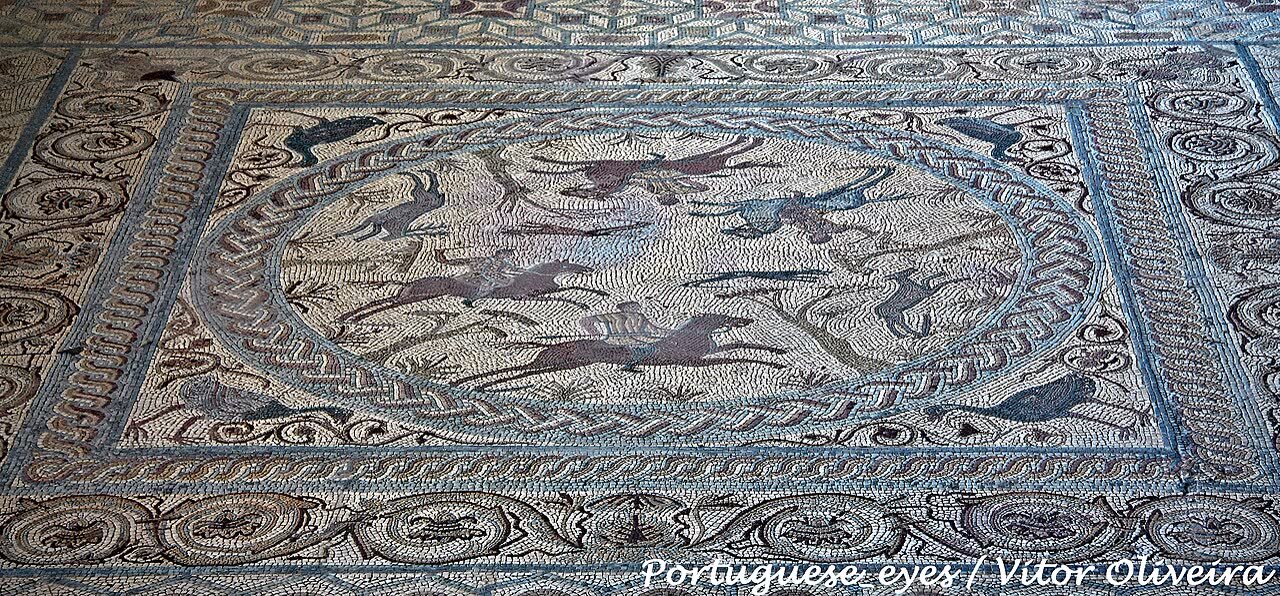
- The House of the Fountains (Casa dos Repuxos): a grand 2nd-century villa with beautiful mosaic floors around a garden of fountains, which still spout water. A roof protects the mosaics, and walkways let you look down on them. Allow 20 to 30 minutes.
- The mosaics: hunting scenes, mythological figures and geometric patterns. Look for animals, birds and mythical figures picked out in coloured stone.
- The House of Cantaber (Casa de Cantaber): the largest private house found on the site, with around 40 rooms, its own baths and gardens.
- The town wall: a defensive wall about 1.5 km long, hastily built as the empire weakened. It cut straight through older houses, and you can still see where. It did not save the town: the Suevi attacked and took Conímbriga in the 460s.
- The baths, forum and aqueduct remains. The forum was the centre of public life, and the baths show the heating system under the floors.
- The museum: finds from the site, including sculptures, coins and everyday objects. It opened in 1962 and became a National Museum in 2017. Allow 30 to 45 minutes.
Getting there
- By car: the easiest option, from Coimbra or the A1 motorway. It is about 16 km from Coimbra, roughly 20 minutes. From Lisbon, allow about 2 hours, and from Porto about 1.5 hours. There is a car park at the site.
- By bus from Coimbra to Condeixa-a-Nova, then a walk of about 2 km. Since August 2025 the region’s buses have been part of the new SIT Metropolitano network, run by Busway Coimbra. A direct bus to the ruins has run in the past, but only once or twice a day, so check the current timetable before you go.
- By train to Coimbra: fast trains from Lisbon and Porto stop at Coimbra-B, as Coimbra-A closed in January 2025. A taxi from Coimbra to the ruins takes about 20 minutes.
- On a tour from Coimbra or Lisbon.
Opening times and tickets
The site and museum usually open daily from 10am to 6pm, with the last tickets sold at about 5.15pm. They close on a few holidays, including 1 January, Easter Sunday, 1 May and 24 and 25 December. A ticket for the ruins and museum costs about €10, and you can buy it online or at the gate. Children usually go free, and people who live in Portugal can get free entry on up to 52 days a year. Hours and prices can change, so check the official Museus e Monumentos de Portugal website before you go.
How long to spend
Two hours is enough for the ruins and museum. Add Coimbra and you have a full day.
A one-day route: arrive at Conímbriga when it opens, before the heat and the coach groups. See the House of the Fountains first, then walk the ruins and the wall. Visit the museum, then have lunch in Condeixa or Coimbra. Spend the afternoon at the old university in Coimbra. See a Coimbra day trip.
Nearby
- Condeixa-a-Nova: the small town next door has a pleasant historic centre with a pillory and a baroque palace. It is also home to POROS, a modern museum about Roman Portugal that makes a good rainy-day addition.
- Buracas do Casmilo: a limestone valley near Condeixa with huge natural hollows worn into the rock face by water. It is a short, scenic walk if you have a car.
Food
- Chanfana: goat slow-cooked in red wine, a speciality of the Coimbra area.
- Leitão: roast suckling pig from nearby Bairrada.
- Pastéis de Tentúgal: thin, flaky pastries filled with egg cream, from a village near Coimbra.
When to go
Spring and autumn are ideal, with mild weather for walking the site. Summer is hot and there is little shade. Winter is quiet and fine on a dry day, as the best mosaics are under cover.
Tips
- Heat and shade: the site is exposed, so visit early in summer.
- Shoes: paths are uneven stone and gravel.
- Kids: the mosaics and fountains are a hit. See Portugal with kids.
- Combine: Coimbra’s university the same day. See the University of Coimbra guide.
FAQ
Is Conímbriga worth visiting?
Yes. It is the best-preserved Roman town in Portugal, and its mosaics are among the finest in the Iberian Peninsula. It is easy to pair with a day in Coimbra.
How long do you need at Conímbriga?
About two hours covers the ruins and the museum at a comfortable pace. Allow longer if you like to read every sign.
Can you get to Conímbriga by public transport?
Yes, but it takes planning. Take a regional bus from Coimbra to Condeixa-a-Nova and walk about 2 km, or check whether a direct bus to the ruins is running. A taxi from Coimbra is the simplest option.
How much does it cost to visit Conímbriga?
A ticket for the ruins and museum is about €10. Children usually go free, but check the official website for current prices.
More: the Coimbra guide, where to stay in Coimbra and a quick history of Portugal.
Some links in this guide are affiliate or referral links (GetYourGuide, Booking.com, Discover Cars, Welcome Pickups, Airalo, Yesim, Saily, Tiqets, Radical Storage, EKTA, AirHelp, Uber). If you book or sign up through them we may earn a small commission or ride credit at no extra cost to you. It helps keep our groups and this site free.
Still got questions?
Ask 305,000+ travellers and locals in our free Facebook groups.