
Trip guides / Day trips
Cabo Espichel: Cliffs, Sanctuary and Dinosaur Tracks
Cabo Espichel is a wild, windswept cape south of Lisbon, where sheer cliffs drop into the Atlantic. On the headland stands a lonely pilgrimage sanctuary with long arcades of pilgrim lodgings, and on the cliffs below you can spot dinosaur footprints. It’s one of the most dramatic places near Lisbon.
Quick answer: Cabo Espichel is about 15 minutes west of Sesimbra and an hour from Lisbon by car. See the Sanctuary of Nossa Senhora do Cabo, walk to the cliff edge viewpoints (carefully), look for the dinosaur trackways on the cliff faces, and stay for sunset. A car is by far the easiest way to get there.

Why go
Most day trips from Lisbon are busy. Cabo Espichel feels like the end of the world: a bare, flat headland, a huge empty square, a church and nothing but sea beyond. The cliffs rise more than 130 metres above the water. It’s free, it rarely feels crowded, and the light at the end of the day is superb. The cape is part of the Arrábida Natural Park, so the headland has stayed almost free of building.
What to see
The sanctuary
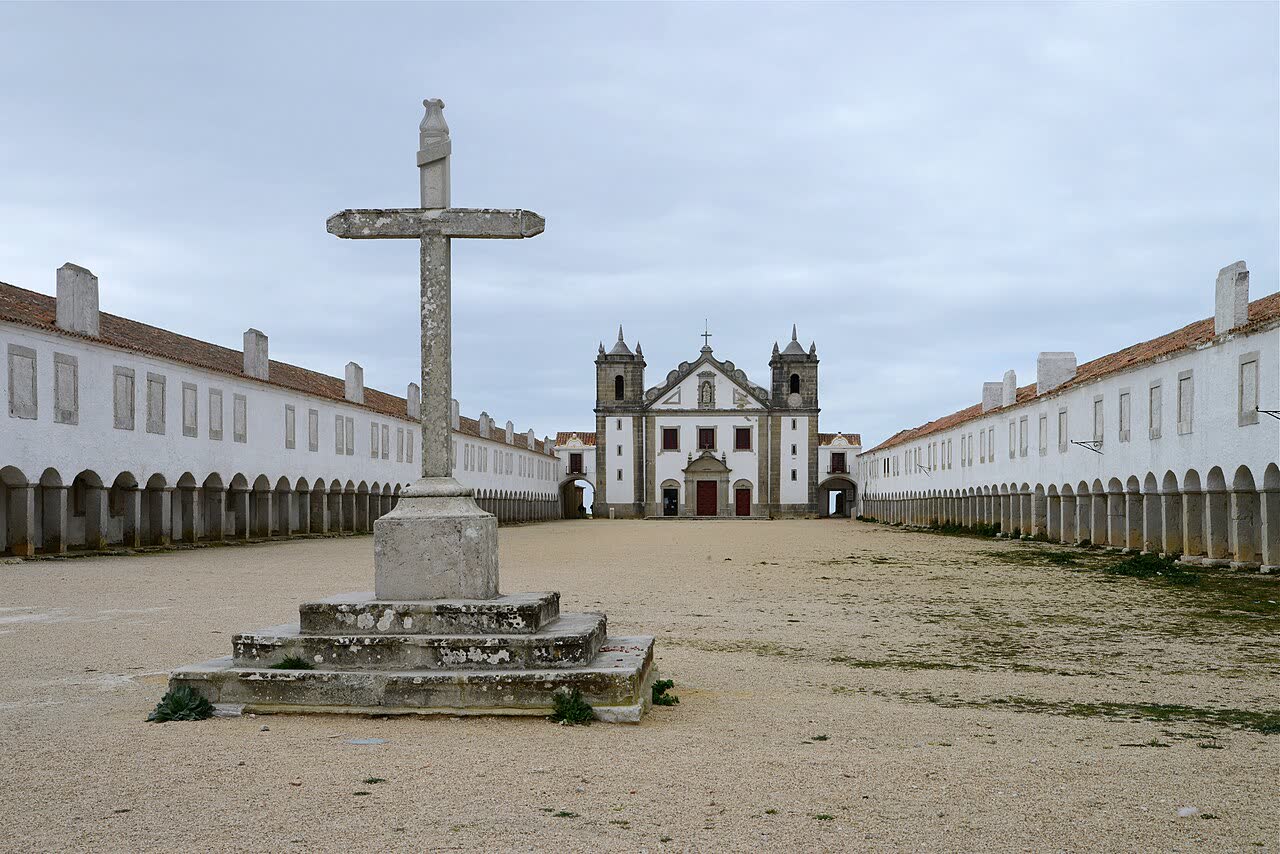
People have come here on pilgrimage since the 15th century, drawn by the legend that the Virgin Mary appeared on the cliff riding a mule. The present church of Nossa Senhora do Cabo was begun in 1701 and consecrated in 1707, to a design by the architect João Antunes. It’s a simple baroque building outside, with a richer interior. On each side of the square run two long, low rows of pilgrim lodgings, built in the 18th century to house the groups of pilgrims (círios) who arrived from towns around Lisbon. Many are now empty, which adds to the ghostly feel. Opening of the church interior varies, so don’t count on getting inside.
- The sanctuary: a baroque church flanked by two long rows of pilgrim lodgings, facing an empty square.
- Casa da Água: a small six-sided fountain house from around 1770, fed by an aqueduct that brought water from the village of Azoia. You can still see parts of the aqueduct as you drive in.
- The opera house: look for the ruins of the Casa da Ópera next to the lodgings, a small theatre built by the Lisbon pilgrims for performances during the festivities.
- Time needed: about 30 minutes for the square, church and fountain house.
The cliffs and the Ermida da Memória
Behind the church, a path leads to the Ermida da Memória, a tiny 18th-century chapel right on the cliff edge, with blue and white tiles telling the story of the legend. It marks the spot where the Virgin is said to have appeared. The views north and south along the coast are huge.
Dinosaur footprints
The cliffs here are protected as natural monuments because of their dinosaur trackways. At Pedra da Mua, just below the chapel, layers of Late Jurassic rock show the tracks of a small herd of long-necked sauropods walking together. Local people long believed these were the hoofprints of the Virgin’s mule climbing the cliff, which is where the name comes from (mua means mule). Further north, at Lagosteiros, there are tracks from the Early Cretaceous, the first of that age found in Portugal. The footprints are on tilted rock faces, so you see them from the clifftop rather than up close. They are easiest to pick out in low, side-on light, early or late in the day.
The lighthouse
The lighthouse stands about 600 metres south of the sanctuary and dates from 1790, with a sturdy six-sided tower. It’s a short walk across the headland. The tower itself isn’t usually open to visitors.
Sunsets
The cape faces west over open ocean, so on a clear evening the sun drops straight into the sea. See the best sunset spots.
Getting there
- By car: the drive from Lisbon takes about an hour, crossing the 25 de Abril Bridge and heading south towards Sesimbra. From Sesimbra it’s about 15 minutes. There’s free parking on the open ground by the sanctuary.
- By bus: Carris Metropolitana line 3721 runs from Sete Rios in Lisbon to Sesimbra in roughly 70 to 80 minutes. From Sesimbra bus terminal, line 3205 runs out to the cape. Services are less frequent than in Lisbon and the trip takes a lot longer than driving, so check current timetables before relying on them, especially for the last bus back after sunset.
How long to spend
An hour or two is enough for the sanctuary, chapel and lighthouse. Most people pair it with Sesimbra for a full day.
A suggested day
- Morning: drive through the Serra da Arrábida and stop at a beach. See Setúbal and Arrábida.
- Lunch: grilled fish in Sesimbra, a fishing town known for its fresh catch.
- Late afternoon: Cabo Espichel, staying for sunset.
Food
There’s little to eat at the cape itself, so plan meals in Sesimbra. The town’s signature fish is black scabbardfish (peixe-espada preto), caught on long lines a few miles off Cabo Espichel and served grilled or in fillets. Fish stew (caldeirada) and grilled sardines in summer are also local staples. For a picnic, pick up Azeitão sheep’s cheese and a bottle of Moscatel de Setúbal from the Arrábida area. See the Portuguese seafood guide.
When to go
The cape is open all year. Spring brings wild flowers on the headland. Summer days are long and the sunsets late, but it can be hazy. In winter the wind can be fierce and the place feels truly wild. The sanctuary still hosts religious celebrations, so you may find it busier on some weekends.
Safety
- Cliff edges: there are few barriers. Stay well back, especially in wind.
- Wind: it’s often very windy, so bring a jacket.
- Kids and dogs: keep them close to you near the edges.
- Facilities: they are very limited, so bring water and snacks.
Combine with
- Sesimbra: see Sesimbra.
- The Arrábida beaches: see the Arrábida beaches.
FAQ
Is Cabo Espichel free to visit?
Yes. The headland, sanctuary square, chapel viewpoint and parking are all free.
Can you get to Cabo Espichel without a car?
Yes, but it’s slow. Take Carris Metropolitana bus 3721 from Sete Rios to Sesimbra, then line 3205 to the cape, and check the times for the return trip.
Where are the dinosaur footprints?
The best known are at Pedra da Mua, on the cliff face below the Ermida da Memória. You view them from the clifftop, ideally in low morning or evening light.
More: Portugal’s hidden gems and the best day trips from Lisbon.
Prices and details change, so please double-check before you travel. Spotted something out of date? Tell us in the groups.
Still got questions?
Ask 305,000+ travellers and locals in our free Facebook groups.