
Madeira Botanical Garden, Funchal
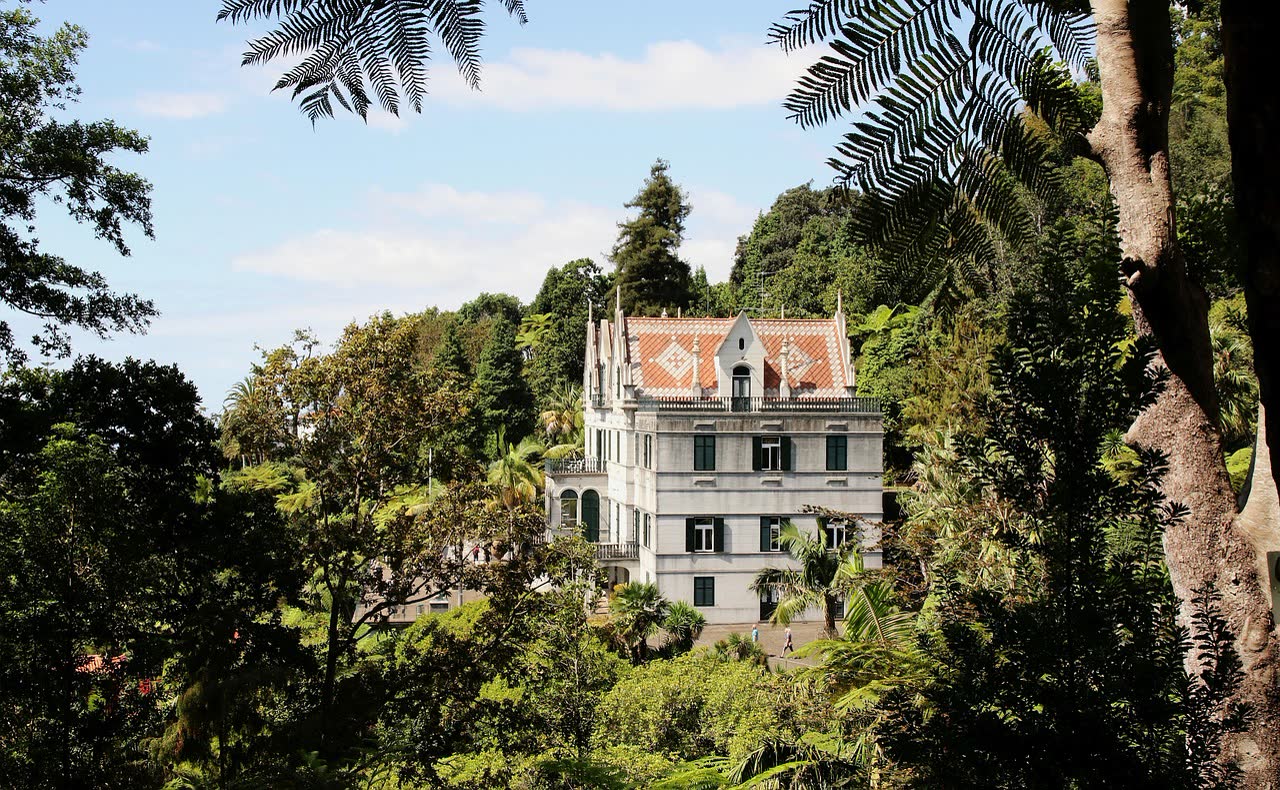
Madeira’s Botanical Garden sits on a hillside above Funchal, with terraces of exotic and native plants, cacti, palms, colourful bedding displays and sweeping views over the city and the bay. It’s a peaceful spot to see why Madeira is called the “floating garden”.
Quick answer: reach the garden by bus or taxi from Funchal, or by the cable car from Monte. Allow 1 to 2 hours. Highlights are the patterned flower beds, the native laurel forest plants, the cacti and succulents, and the views. Combine it with Monte and the toboggan ride.
Why go
Madeira’s mild climate lets plants from every continent grow side by side, and the Botanical Garden is the best place to see them in one visit. It’s run by the regional government, it’s less crowded than the big private gardens in Monte, and the views over Funchal’s amphitheatre of hills are some of the best in the city.
A little history
The garden sits on the Quinta do Bom Sucesso, an estate that belonged to the Reid family, of Reid’s hotel fame, from 1881. The regional government opened it as a botanical garden in 1960. In 2009 it was renamed after its founder, the agronomist Rui Vieira, so you may see it signed as Jardim Botânico da Madeira Eng. Rui Vieira.
What to see
The garden holds more than 2,500 plants from around the world, spread over terraces that drop down the hillside. Paths zig-zag between the levels, so you can wander without a fixed route.
- Bedding displays: geometric patterns of colourful plants, laid out like a carpet on the slope. This is the classic photo.
- Native plants: species from Madeira’s laurel forest and cliffs, many found nowhere else in the world.
- Exotic plants: palms, cycads, cacti, succulents and tropical flowers from around the world.
- Useful plants: sections of crops and medicinal and aromatic herbs, including ones grown on the island.
- Birds: an area with parrots and other exotic birds, which children usually enjoy.
- The views: over Funchal, the harbour and the ocean.
- A natural history museum on site, along with a herbarium.
Madeira’s native plants
Look out for the plants that make Madeira special. The laurisilva, the ancient laurel forest that still covers much of the island’s north, is a UNESCO World Heritage Site, and the garden grows many of its trees and shrubs. You’ll also see the Pride of Madeira, a shrub with tall spikes of blue-purple flowers in spring, and the dragon tree, with its umbrella of stiff leaves. Seeing them here helps you spot them later on a levada walk.
Getting there
- By bus: Horários do Funchal city buses 029 and 031 stop at the garden. These routes were renumbered in March 2026 (they used to be 29 and 31). Check current times, as services are less frequent at weekends.
- By cable car: the Funchal cable car runs from near the Old Town up to Monte. From there, walk to Largo das Babosas and take the smaller Botanical Garden cable car across the valley. The ride is about 1.6km and takes roughly nine minutes. It usually runs from 9am to 5pm, with last boarding at about 4.50pm.
- By taxi: about 10 to 15 minutes from the centre, depending on traffic.
- On foot: the garden is about 3 km from the centre, but the climb is very steep. Walking down is easier than walking up.
How long to spend
Allow 1 to 2 hours for the garden itself. For a half day, combine it with Monte.
A half-day route
- Start: take the cable car from the Old Town up to Monte. See Funchal Old Town.
- Monte: visit the church and the Monte Palace gardens.
- Cross over: ride the Botanical Garden cable car from Babosas.
- Finish: walk the garden, then take a bus or taxi back down. Or do it the other way round and end with the toboggan ride from Monte.
The toboggan, the famous wicker sledge pushed downhill by two drivers in white, costs €30 for one person, €40 for two and €60 for three since May 2026. It’s cash only, so bring notes.
Food
There is a small cafe in the garden for drinks and snacks. For a proper meal, head back to Funchal. Try espetada, black scabbard fish with banana, or a slice of bolo de mel, the spiced honey cake.
When to go
- Spring is best for flowers, around the Flower Festival in Funchal. See the best time to visit Madeira.
- Year round: something is always in flower, thanks to the mild climate.
- Time of day: mornings are usually clearer and cooler. Cloud often builds over the hills in the afternoon.
Tips
- Combine with Monte by cable car. See the Monte toboggan.
- Hours: the garden is usually open daily from 9am to 6pm, with last entry around 5.30pm, and closed on Christmas Day. Check times before you go.
- Tickets: visitors pay an entry fee, which was about €10 in 2025. Since 2026, Madeira residents get in free.
- Shoes: the paths are steep in places.
- Sun: much of the garden is open terraces, so bring a hat and water in summer.
FAQ
How much does the Madeira Botanical Garden cost?
Visitors pay an entry fee, which was about €10 in 2025. Madeira residents have had free entry since 2026. Check the current price before you go.
Is the Botanical Garden or Monte Palace better?
The Botanical Garden is better for plants from Madeira and around the world, and for views over Funchal. Monte Palace is a private garden with lakes, old tiles and sculptures. With a full morning, you can do both using the cable car between them.
How do you get from Monte to the Botanical Garden?
Walk to Largo das Babosas in Monte and take the Botanical Garden cable car across the valley, a ride of about nine minutes.
How long do you need at the Botanical Garden?
One to two hours is enough for most people. Keen gardeners may want longer.
More: things to do in Funchal and romantic Madeira.
See also: the Madeira Flower Festival and Monte Palace Tropical Garden.
Prices and details change, so please double-check before you travel. Spotted something out of date? Tell us in the groups.
Still got questions?
Ask 305,000+ travellers and locals in our free Facebook groups.