
Trip guides / Sintra and Cascais
The Capuchos Convent, Sintra
Hidden deep in the Sintra forest, the Capuchos Convent is one of the most atmospheric places in the Sintra hills: a tiny, humble friary built into the rocks, with cells and doorways lined with cork. It’s the opposite of Pena Palace’s grandeur, and far quieter.
Quick answer: the Convento dos Capuchos is in the forest about 15 minutes’ drive from Sintra’s old town, off the road towards Cabo da Roca. Allow about an hour. A car, taxi or tuk-tuk is the easiest way to get there. It’s managed by Parques de Sintra, so check tickets and opening hours.
Why go
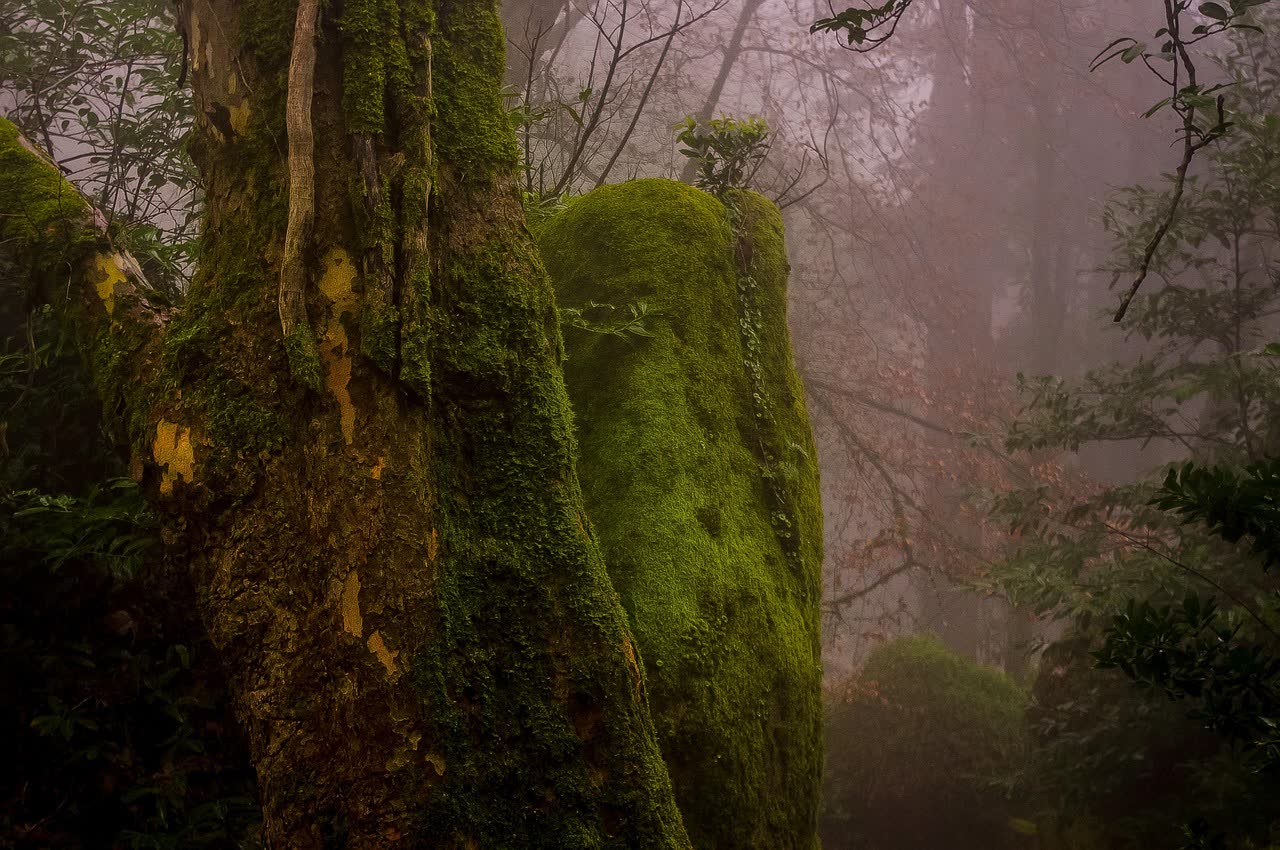
After the crowds and colour of Pena and Quinta da Regaleira, Capuchos feels like stepping into another world. There are no gilded halls here, just low granite rooms tucked between giant mossy boulders, with the sound of birds and dripping water. It’s part of Sintra’s UNESCO-listed cultural landscape and one of the best places to understand how simply the friars lived.
A short history
The convent was founded in 1560 by D. Álvaro de Castro, an adviser to King Sebastião, for Franciscan friars who followed a strict rule of poverty. They lived here until 1834, when religious orders were abolished in Portugal and the building was abandoned. In 1873 it was bought by Francis Cook, the English owner of nearby Monserrate. The Portuguese state acquired it in 1949, and Parques de Sintra has since carried out careful restoration work.
Its official name is the Convent of the Holy Cross of the Sintra Hills. Álvaro de Castro built it to fulfil a wish of his father, João de Castro, who had dreamed of a modest place of worship on the spot. The first community was just eight friars. When Philip II of Spain, also Philip I of Portugal, visited in 1581, he is said to have praised it as the poorest of the places he loved, setting it against his rich palace of El Escorial.
What to see
- The cork-lined cells: tiny rooms with low doors, insulated with cork, where Franciscan friars lived. Cork kept out the damp and cold, and gave the convent its English nickname, the Cork Convent.
- The chapel and the refectory with its stone table.
- The small chapels and shrines: scattered around the grounds, some built into rock hollows, with simple tile panels and religious scenes.
- Friar Honório’s cave: a cramped hollow under a rock where, according to convent tradition, Friar Honório spent the last decades of his long life in penance. It is one of the most talked-about spots on the visit.
- The kitchen, library and infirmary: plain working rooms that show daily life in the community.
- The forest setting: mossy boulders and ancient trees. The friars protected this old woodland, and it’s still one of the wildest corners of the Sintra hills.
- The simplicity: a striking contrast with Sintra’s palaces.
Tickets and opening hours
The convent is usually open daily from 9am to 5.30pm, with last entry at 5pm. In 2026, adult tickets cost about €11, with lower prices for young people aged 6 to 17 and over-65s (about €9) and a family ticket for two adults and two young people (about €29). Buy online at the Parques de Sintra website or on site. The ticket office usually closes for lunch from noon to 1pm, when you can use the ticket machines. Restoration work is ongoing, so some areas may be closed when you visit. Times and prices can change, so check before you go.
Getting there
- By car: the convent is about 7 km from Sintra’s old town on narrow, winding forest roads. There is a small car park at the entrance.
- By bus: take the train from Lisbon to Sintra (see Lisbon to Sintra), then Carris Metropolitana bus 1253. The nearest stop is still about a 40-minute walk from the convent, so check the route and timetable carefully.
- Taxi or tuk-tuk: the simplest option without a car. Arrange your return trip before the driver leaves, as phone signal is patchy.
- On foot: keen walkers can follow forest trails from Sintra or from Monserrate. Allow plenty of time and carry water.
How long to spend
Allow about an hour inside the convent, or longer if you follow the paths into the woods around it. With the drive and a stop at a nearby viewpoint, plan on half a day.
Suggested half-day route
- Start: visit Monserrate Palace and its gardens.
- Next: drive or take a taxi up to Capuchos for an hour among the cells and boulders.
- Then: continue to the Peninha viewpoint for huge views over the coast, and finish at Cabo da Roca for sunset. The clifftop is free. Since July 2026 the lighthouse has also opened for paid visits run by Parques de Sintra.
Food
There’s nowhere to eat at the convent, so bring water and a snack. Back in Sintra, try the town’s famous pastries: travesseiros (puff pastry filled with almond cream) and queijadas (small cheese tarts). The villages near Cabo da Roca and Colares have simple restaurants serving grilled fish.
Look out for Colares wine too. The local Ramisco vines grow in deep sand near the coast, which protected them from the phylloxera pest that wiped out most of Europe’s vineyards in the 19th century. The reds are firm and unusual, and production is tiny.
When to go
- Any time of year: the forest shade makes it pleasant even in summer.
- Weekdays and early: the quietest times, when you might have the cells to yourself.
- After rain: the moss is at its greenest, but paths are slippery.
Tips
- Height: the doorways are very low, so watch your head.
- Combine with Peninha and Cabo da Roca. See Sintra hikes and Cabo da Roca.
- Weather: damp and misty, so bring a layer.
- Access: steps and uneven floors make it hard for wheelchairs and pushchairs.
- Shoes: wear grippy footwear for the wet stone.
FAQ
How do I get to the Capuchos Convent without a car?
A taxi or tuk-tuk from Sintra is easiest. Bus 1253 from Sintra station gets you closer, but you still face a walk of about 40 minutes from the nearest stop.
Is the Capuchos Convent worth visiting?
Yes, if you want a calm, atmospheric break from Sintra’s busy palaces. It’s small and simple, so it suits people who enjoy history and nature more than grand interiors.
Is it suitable for children?
Older children usually love the tiny doors and hidden cells. The steps and uneven floors make it hard with a pushchair, so bring a baby carrier instead. See Sintra with kids.
More: visiting Sintra, Monserrate and Portugal’s hidden gems.
Prices and details change, so please double-check before you travel. Spotted something out of date? Tell us in the groups.
Still got questions?
Ask 305,000+ travellers and locals in our free Facebook groups.